Happy GLOGmas, Josie! Josie is a big xianxia fan, and by fortuitous chance, I had already begun dusting off an old wuxia system I had been working on years ago. Not quite the same genre, of course, but the similarity is significant, and also I don't actually really like xianxia. This post owes its existence to Phlox's Vain the Sword hack, which (as far as I am aware) came up with the frankly brilliant attack/maneuver system that I have herein stolen wholesale. The old version of this system used something like Lancer's two actions + movement, and it sucked ass and I'm glad it's gone.
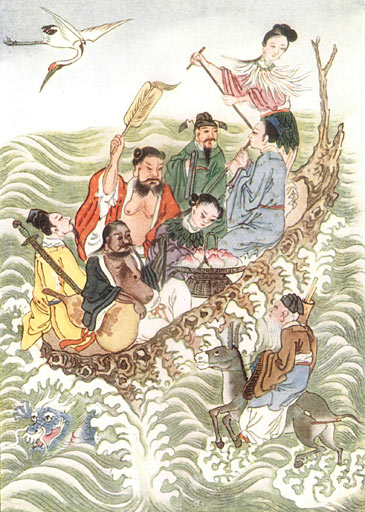
Character Creation
Your character has four attributes: Might, Agility, Endurance, and Will. These are pretty self-explanatory. Assign a score to each of them from the following array: +2, +1, 0, and -1.
Your character also has five statistics: Stamina, Energy, Damage, Defense, and Attack. Damage equals Might, Defense equals Agility + 6, Stamina equals Endurance + 6, Energy equals Will + 3, and Attack equals your level, which begins at 1.
Your character is a member of a School (examples listed at the end of the post), which has several traits: a skill, preferred weapons and techniques, and two Arts. Each School prefers one of the four noble weapons (the sword, the saber, the spear, and the staff) and a more specialized weapon. In addition to the skill from your School, pick a background and an associated skill (i.e. Thief and Thievery, Noble and Etiquette, Merchant and Accounting, Barbarian and Horse Archery).
Your character's starting equipment is: a set of clothes as befits their social status and one of the preferred weapons from their School. Access to other resources will be dictated by the character's social positioning and connections. There's no set inventory size or anything, but remember that your characters are martial artists doing crazy feats of acrobatics, and also that your typical martial artist is probably some sort of ascetic who disdains material goods, some sort of outlaw who doesn't own jack shit, or some sort of rich fuck who has servants for that. Carry what makes sense in that context. Remember that medium weapons are only concealable if you're really trying, and long weapons must be carried in the hand and therefore cannot be concealed.
Combat
It's a wuxia game, this is obviously the important part.
Weapons:
- Sword (the Gentleman): +1 Defense, medium. Carrying a sword marks you as refined.
- Saber (the General): +1 Damage, medium. Carrying a saber marks you as vicious.
- Spear (the King): +1 Attack, long. Carrying a spear marks you as competent.
- Staff (the Grandfather): +1 Stamina, +1 Energy, medium or long. Carrying a staff marks you as pious.
Other weapons beyond the noble four will typically have a penalty and two bonuses. Dual-wielding weapons that can be dual-wielded doesn't change your numbers in any way, but it can be used for fictional positioning as it comes up (as can, of course, not dual-wielding). Of the noble weapons, only the saber is sometimes dual-wielded. If you try to dual-wield swords, you agree to waive your right to bring legal action against the author of this ruleset for any injury suffered as a result (at her hands or otherwise).
Initiative: Usually I hate individual initiative, but for a game such as this, I feel it's appropriate. So: each participant in the combat rolls d10 + Will + a modifier based on weapon length. When the encounter is being entered into openly, with both parties prepared, long weapons get +1, medium weapons get +0, and short or ranged weapons get -1. When the encounter is being entered into by surprise or very suddenly, short weapons get +1, medium weapons get +0, and long or ranged weapons get -1. The higher a participant's initiative roll is, the earlier they act in each round of combat. If a participant chooses, they may, on their turn, announce that they are delaying their turn to a point before or after the turn of any other participant with a lower initiative, and continue using their original result in later rounds. If an ambush is very successful (probably requires the people on the receiving end to fail a Will roll, if they're badass martial artists too), they cannot act in the first round, and incoming attacks ignore their Stamina (read: HP) during this round.
Turns and Actions: On a character's turn, they may perform a maneuver and an attack, in whatever order they prefer. Forfeiting an attack does not grant an extra maneuver, and vice versa. Particular Arts may grant extra actions (things you can do on your turn that aren't attacks or maneuvers), at-will actions (things you can do whenever you want), and reactions (things you can do in response to a particular trigger during someone else's turn).
Maneuvers: A maneuver may consist of both movement and affecting some aspect of the scene, including other characters. Movement distances shouldn't be particularly set in stone, but take 50' running with a vertical jump of 5' (this doesn't sound that high, but it really is) and a horizontal jump of 10' as a good basis. Maneuvers may, with a successful roll, have one of the following effects:
- +2 Attack vs a specific opponent
- +2 Defense vs a specific opponent
- +1 Damage vs a specific opponent
- Removing yourself from a poor position inflicted by an opponent
- With Momentum: pin a Disadvantaged opponent, preventing them from maneuvering
- With Momentum: pin a Disadvantaged opponent, preventing them from attacking (maneuver roll is made at -2)
- An effect negotiated with the GM
Additionally, a successful maneuver may grant the character that performed it Momentum and inflict Disadvantage on their target—more on this later. Maneuvers and their effects are entirely based in fictional positioning and must be justified therein. If you do something really badass and cool, based on one of your Arts or abilities, &c, the effect could certainly be greater than the listed standard effects, but the GM should generally err on the side of caution here. The maneuver roll is d10 + [attribute] vs a flat 6 + [attribute] from the defender. The attribute in question can be any that makes sense in context, though I would expect this to mostly be Might and Agility. If you incorporate some particular aspect of the environment into the maneuver, you roll with +2.
Attacks: Attacks are pretty simple, with a roll of d10 + Attack vs the defender's Defense. A successful attack does not physically hit the target unless it brings them to -1 Stamina or below (or some circumstance is allowing the attack to ignore Stamina). Stamina is explicitly "don't get hit points" and should be treated as such by fictional positioning in all contexts. An attack with a weapon reduces the target's Stamina by d4 + Damage (minimum 1, unless reduced by DR), and an unarmed attack reduces it by 1 + Damage (minimum 1, unless reduced by DR). If the target is brought to -1 Stamina or below, the attacker actually hits them and may choose to spare them, scar them, or injure them.
Momentum and Disadvantage: Basically, if a character ends up in a solidly fictionally advantageous position over another, they have Momentum, and the other character has Disadvantage. This should require some investment to keep going—grappling is a great example, because you're getting stuck in; if you stop grappling them, they aren't in a bad spot anymore. Similarly, if you really solidly wind someone, you have to keep pressing them so they don't just recover. If you just throw dust in someone's eyes, that's a temporary gain, not one you can really press. Typically, you'll get Momentum/inflict Disadvantage by performing an appropriate maneuver. Keeping Momentum/Disadvantage requires maintaining the positional advantage that granted it in the first place, so the target will probably be trying to remove it with their own maneuvers. Additionally, a character with Momentum may remove it at any time for +1 on any roll, and all attacks against a character with Disadvantage have +1 Attack.
Scars and Injury: Scars are cosmetic damage—basically, marking and/or humiliating your opponent without actually injuring them. The specific form this takes depends on your choice and the weapons/lack thereof involved, and might also involve their equipment (destroying it, stealing it, &c), but it might well be permanent, like a broken nose or an angry scar on the cheek. Injuries are what happen when you're really, really trying to hurt someone—if you injure someone, you don't get to choose how. When an injury is inflicted, first, roll a hit location on d8:
- Your choice
- Head
- Chest
- Abdomen
- Left leg
- Right leg
- Left arm
- Right arm
Then, roll a severity on d4 + (1 + the injured party's current Stamina [which is negative]) on either the table for injuries from unarmed attacks or from weapons. Unarmed:
1-3. -1 max Stamina.
4-5. -1 max Stamina, affected body part is disabled until the end of the scene.
6-7. -2 max Stamina, affected body part is disabled for a week.
8-9. -3 max Stamina, affected body part must receive medical attention or it is permanently disabled.
10+. Death.
And armed:
1. -1 max Stamina
2-3. -1 max Stamina, affected body part is disabled until the end of the scene.
4-5. -2 max Stamina, affected body part is disabled for a week.
6-7. -3 max Stamina, affected body part must receive medical attention and you must roll d10 + Endurance vs 9 or it is permanently disabled.
8+. Death.
All max Stamina damage recovers at the rate of 1/day of rest. If your head or chest are disabled, you are incapacitated.
Enemies: Significant enemies who are badass martial artists like you function on exactly the same rules. However, there are also mooks—basically, gaggles of 0 Stamina chumps who act as one opponent. They have "Stamina" equal to the number of people in them, and every point of damage you deal incapacitates one of them (you can choose to be killing them, injuring them, or knocking them out basically as you like, they're chumps). They still have attributes and roll everything normally, though they cannot be injured—once they're out of dudes, they're done. They also have your typical 2d6 Morale from the ol' Dungs and Drags. Their attacks deal the same amount of damage regardless of how many people are left in them. Armored mooks may have DR: 1 for shields or light armor, 2 for light armor and shields or heavy armor, 3 for heavy armor and shields. Martial artists don't use armor or shields because they aren't cowards. Average people are mooks with only one dude and -3 in every attribute.
Social Conventions: Normal people and most mooks will interpret a weapon as a threat to their lives. Insane martial artists (like you) probably won't, but regardless, pulling a weapon on someone will certainly escalate the situation, and you shouldn't expect anyone to take it easy on you if you do so unless they're way better than you and they know it. Most people don't want to kill anyone or die, and losing a fight is by no means a certain death sentence. Similarly, killing someone instead of sparing or scarring them is a very, very drastic measure. If you don't have a damn good reason, expect serious consequences.
Recovery: Lost Stamina and Energy is regained when you have a chance to recuperate—a few hours' breather, a cup of tea or broth, an inspiring speech or moment of personal development, &c. Basically, you can't be actively in danger or being pursued.
Advancement
Gain XP under the following circumstances:
- A significant fight: 1 XP
- An emotionally charged duel: +1 XP
- You lost: +1 XP
- You scarred a significant opponent: +1 XP
- You got scarred: +1 XP
- An emotional falling-out: 1 XP
- You were lovers, best friends, or sworn allies: +2 XP
- An emotional rapprochement: 1 XP
- You were once lovers, best friends, or sworn allies, then turned to enmity: +2 XP
- A significant internal change in worldview or emotional landscape: 1 XP
Spend XP under the following circumstances for the following benefits:
- 5 XP and a week of study with a master: learn a new Art.
- 5 XP and a week of lone study: convert an Art from a different School to use the weapons and techniques of your School.
- 30 XP and a year of lone study: found a new School, of which you are the master.
For every 10 XP you spend, gain +1 level and add +1 to an attribute of your choice. If you are master of a School, you need only study alone.
Some Schools
You cannot use the Arts of a School if you are not using the associated weapons or techniques.
Early Wing Style
Skill: Dancing
Weapons: sword, fans (-1 Damage, +1 Defense, +1 Stamina, short)
Techniques: high kicks, elbows
Arts:
- Three Crane Stance: As a maneuver, expend 1 Energy. For the rest of the scene, you can jump and wallrun twice as far and high as you normally could. Every time you use your maneuver to jump or wallrun, gain an additional +1 Defense until the start of your next turn.
- Beating Wings: As an attack, expend 2 Energy. Make a melee attack against every opponent you can reach during this turn.
Creeping Vine Style
Skill: Stealth
Weapons: spear, dagger (-1 Defense, +1 Energy, +1 Damage, short)
Techniques: wrestling, spearhands
Arts:
- Striking Viper: As a maneuver when attacking from surprise, expend 1 Energy. You may automatically pin the target (as the basic maneuvers) with no roll required, and may pin them at spearpoint rather than wrestling if desired.
- Strangling Fig: As a maneuver, expend 2 Energy. You may attempt to pin an opponent (as the basic maneuvers) at +2 without requiring Momentum/Disadvantage, and may pin them at spearpoint rather than wrestling if desired.
Ninefold Prongs Style
Skill: Blacksmithing
Weapons: saber, hammer (-1 Attack, +2 Damage, long)
Techniques: punches, flying kicks
Arts:
- Ten Point Alignment: As a maneuver, expend 1 Energy. For the rest of the scene, when you use your maneuver to charge headlong at an opponent, gain an additional +1 Attack until the start of your next turn.
- Eleven Angle Strike: As an reaction when attacked, expend 2 Energy. If the incoming attack fails, you may make a free attack on a success.
Heaven-Piercing Heresy Style
Skill: Theodicy
Weapons: staff, rope dart (-1 Defense, +1 Attack, +1 Energy)
Techniques: palm strikes, knees
Arts:
- Upend Order: As an extra action, expend 1 Energy. For the rest of the scene, while you spin your weapon as an extra action, everyone within earshot (except you) has -1 Will and is inclined to violence rather than deescalation or peace.
- Paralytic Injection: As an extra action when you succeed on an attack, expend 2 Energy. Even if the target is not at negative Stamina, you still tap rather than hitting them, and they must roll Will vs 6 + your Will. On a failure, one of their limbs (your choice) is paralyzed for the remainder of the scene.
Purifying East Wind Style
Skill: Calligraphy
Weapons: sword, hook-swords (-1 Stamina, +1 Attack, medium and long (whichever is advantageous))
Techniques: ridgehands, leg kicks
Arts:
- Holy Talisman: Outside of combat, instill 1 Energy into a paper seal. You cannot regain this Energy until the seal has been expended or destroyed. You may expend the seal as a maneuver to force all beings of your choice to roll Will vs 6 + your Will or be unable to approach the seal until the start of your next turn. Spirits automatically fail Will rolls against this Art.
- Evil-Binding Threads: As an attack, expend 2 Energy. Any target of your choice within spear-reach must roll Agility vs 6 + your Will. On a failure, they are ensnared and immobilized by immaterial ropes connected to you.
No comments:
Post a Comment