Showing posts with label GLOG. Show all posts

Thursday, June 12, 2025

XVI. The Tower (GLOG Class: Wizard)

To play this class, you will need either a full physical 78-card tarot deck or a method of imitating one satisfactorily (the Dash Delta dicebot on Discord has a very nice tarot feature that includes reversed cards, an essential element of this class). You are encouraged, but not required, to play your cards with all the panache and theater you can muster and to perform normal readings in the course of the game.
 

Class: Fortune-Teller

 
Skills: Bluffing and 1d3: 1. Shoeing Horses, 2. Storytelling, 3. Silversmithing

Starting Equipment: A 78-card tarot deck, an iridescent or otherwise colorful robe, a crystal ball (completely inert), a dagger, and a stout staff. 

A: The Tarot, Hand of Fate, Trusted Voice
B: Destiny, +1 Hand
C: Scry, +1 Hand, +1 Fate
D: Burn, +2 Hand

The Tarot: At midnight, shuffle your deck (adding any cards which were in your hand, played, or discarded back in), draw a number of cards equal to your Hand (3 at A template), and add them to your hand, which you may look at. Cards in your hand must remain in the orientation in which they were drawn (upright or reversed). You may play a card face-up to activate its effect, and you may stack additional cards from your hand face-down beneath it to enhance its power (card descriptions use the notation [stack] to represent the number of cards used, with the initial face-up card counting as 1). If a card is destroyed in-fiction, remove it from your deck and do not add it back in until you acquire a replacement. Card effects may target any contextually appropriate person, creature, or object that you can see within earshot, unless otherwise specified. In combat, playing a card in any way takes your action unless otherwise specified.

Hand of Fate: You have 1 Fate. This may be spent, at will, to discard a card from your hand and replace it with a random card drawn from the deck, or to flip a card from upright to reversed and vice versa. You may temporarily acquire more Fate from cards of the Major Arcana, as detailed below, and there is no limit to how much Fate you may have at any given point, but at midnight, no matter how much Fate remains, it is reset to 1.

Trusted Voice: Your regular readings are treated with respect by all folk, and your predictions are widely held to be trustworthy. You are under no obligation to tell the truth about your divinations, but if you acquire a reputation for dissembling within readings, you lose this ability.
 
Destiny: You may discard any number of cards from your hand to draw and play a random card from your deck sight unseen, with [stack] equaling twice the number of discards.
 
Scry: Before shuffling and dealing your deck at midnight, you may choose to search it and place one card of your choice into your hand. This reduces your Hand by one (and the chosen card still counts towards Hand) until the next time you shuffle your deck and refresh your hand.
 
Burn: Draw randomly or pick from your hand three or more cards, which must remain in the order and orientation they were drawn/picked in (you can mix and match drawing and picking). Create a reading based on this sequence of cards and negotiate an effect for it with the DM, which transpires immediately. The cards you use for this ability instantly burn to ash and may never be used again. Any replacements you acquire for them are inert and powerless, including in regular readings.
 

Suits

 
This is where I reveal I'm a coward and a rube and didn't come up with 156 bespoke effects for 78 cards in upright and reversed orientations. Sorry. Instead, each suit (including Major Arcana) has an upright and a reversed effect, and each card of the Major Arcana also has unique upright and reversed effects. DMs and players are encouraged to come up with unique abilities for each card of the Minor Arcana as they come up, or I may create an additional post with further effects if I feel up to it (no promises).
 
Swords:
  • Upright: An unlikely accident befalls the target and deals [stack]d6 damage to it. You may choose whether this coincidence transpires in [stack]d6 rounds or [stack]d6 minutes.
  •  Reversed: The next time the target would take damage, an unlikely coincidence intervenes, reducing the damage by [stack]d6. May be played as a reaction.
Wands:
  • Upright: Target flame (open or contained) either explodes into a blinding display of fireworks (all who see it must save vs blindness until it's over, lasts [stack] rounds) or into a cloud of choking, obscuring smoke with a radius of [stack]×10 ft.
  • Reversed: [stack] targets must save vs confusion, taking -1 to all rolls instead on a success. The effect lasts 1d4+1 rounds.
Cups:
  • Upright: Gain an intuitive and perfectly accurate empathetic understanding of the emotions of either 1 target for [stack]d6 minutes or [stack] targets for 1d6 minutes.
  • Reversed: A target becomes completely emotionally deadened (immune to fear, pain, joy, lust, etc) for [stack]d6 rounds, or [stack] targets are so affected for 1d6 rounds. 
Pentacles:
  • Upright: The target heals [stack]d4 HP. If this would bring them above their max HP, they gain [stack] max HP until the next time this card is shuffled back into the deck.
  • Reversed: 1d10×([stack]-1)×10 large, foreign gold coins appear in your hand and disappear a minute later, or 1d10×10 large, foreign gold coins appear in your hand and disappear a minute/hour/day/week/month/year later (increasing per [stack]).
Major Arcana:
  • Upright or Reversed: Gain [stack] Fate.

Unique Card Effects

 
0. The Fool:
  • Upright: All bonds (physical, mental, social) restraining [stack] targets burst asunder instantly. The targets cannot be bound, slowed, hindered, or otherwise restrained for [stack] hours thereafter.
  • Reversed: [stack] targets are seized by chains restricting all their limbs (if any), which disappear after [stack]d4 rounds. Each round, they may use their action to save to escape.
I. The Magician:
  • Upright: For the next [stack] minutes, either [stack]+1 human-sized (or smaller) targets or one target no bigger than ([stack]+1)×4 times larger than human-sized float up to no higher than [stack]×10 ft above the ground at your will. Each round, they may use their move to save to escape. You may end the effect at will.
  • Reversed: For [stack] rounds, [stack] targets have their weight magnified, slowing them by [stack]×10 ft (or more on particularly soft ground) and causing them to take [stack]d4 damage per round as they're crushed under their own weight. Flying targets immediately plummet to the ground.
II. The High Priestess:
  • Upright: For [stack] hours, you can see all magic effects and intuit their basic functions, penetrate all illusions, sense traps on a 5-in-6, and interpret all omens clearly.
  • Reversed: [stack] targets are disguised as something with roughly similar shape and size for [stack] hours.
III. The Empress:
  • Upright: Target living thing grows—plants, fungi, and the like grow to cover an area no more than [stack]×100 ft to a side permanently, while animals and the like grow to [stack]+1 times their original size for 10 minutes, adding +[stack] to their Strength modifier.
  • Reversed: A target withers and desiccates, taking [stack]d4 damage and [stack]d4 Strength damage (save for half). If played on a plant, fungus, or the like, it and all similar living things within a radius of [stack]×50 ft instantly die with no save.
IV. The Emperor:
  • Upright: You may speak with [stack] of the following categories for [stack] hours: animals, plants, corpses, doors, stones, weapons, clothes, and speakers of any specific language. They have personalities befitting their nature and are not automatically cooperative.
  • Reversed: [stack] targets are completely silenced and unable to create noise for [stack]×10 minutes.
V. The Hierophant:
  • Upright: [stack] targets must save vs charm. If charmed, they treat you like a trusted (but not boon) friend for [stack]d6 minutes.
  • Reversed: Create an illusion deceiving up to [stack] senses, which you can control and move for [stack]d4 minutes, after which it disappears.
VI. The Lovers:
  • Upright: Target object no larger than a cube [stack]×5 ft to a side is repaired, even if it was reduced to dust, or target heals [stack]d6 HP.
  • Reversed: Target object no larger than a cube [stack]×5 ft to a side is shattered into a million pieces.
VII. The Chariot:
  • Upright: For [stack] rounds, a target may move at [stack]+1 times their normal speed and may take an additional action every round in combat. After the effect ends, the target is lethargic (cannot move, has no action in combat) for [stack] rounds.
  • Reversed: For [stack] minutes, a target must save each round or lose their action and is slowed by [stack]×10 ft.
VIII. Justice:
  • Upright: Speak a proper name and pick a condition: until you reach the bearer of that name or until the bearer of that name is dead. Until the condition is fulfilled, do not reshuffle this card unto the deck; it remains in play. You know the exact direction and distance of the target constantly, no matter where it is, and all attacks made against it gain +[stack] to hit, even if you'd wish otherwise.
  • Reversed: [stack] targets are concealed from [stack] senses for one hour, or one target or location is concealed from [stack] senses for [stack] hours. 
IX. The Hermit:
  • Upright: After 11 minus [stack] minutes of study, you understand the literal meaning of a piece of writing or other object of art.
  • Reversed: You can hear a target's thoughts as if they were your own for [stack] minutes. They may save to feel your presence in their mind.
X. The Wheel of Fortune:
  • Upright: The next [stack]×2 times you blink, you instantly appear wherever you were looking before you blinked when you open your eyes.
  • Reversed: Name a category. For the next [stack] minutes, everything in that category within sight approaches you—anything which can move under its own power slowly wanders towards you as if of its own accord, anything which can't floats at a sedate but inexorable 10 ft per round.
XI. Strength:
  • Upright: The next [stack] attacks and harmful effects targeting a target miss or fail as if by coincidence. May be played as a reaction.
  • Reversed: [stack] arrows appear from thin air and orbit you for the next hour. You may launch any number of them as an action; they cannot miss or be mitigated in any way and each deal 1d4 damage.
XII. The Hanged Man:
  • Upright: For [stack] hours, everyone you meet will treat you like an exotic but important and fascinating foreign dignitary, granting +2 reaction. For this duration, you cannot be ignored and are the most interesting thing in any room you walk into.
  • Reversed: For 8 hours, you gain +[stack]+1 AC if you are unarmored, as though objects which approach you suddenly slow to be easily avoided, and you are always the least interesting person in any group or crowd.
XIII. Death:
  • Upright: A target rolls [stack] mutations on the DM's favorite table and heals [stack]d4 HP. These mutations last [stack] days, after which the target saves against each of them, losing them on a success.
  • Reversed: A target becomes immobile, inactive, and completely immune to any change or harm whatsoever for [stack]d6 rounds. May be played as a reaction.
  • Upright or Reversed: You may discard your entire hand and redraw back up to the number of cards that were in your hand immediately before you played this card.
XIV. Temperance:
  • Upright: Within a cube no more than [stack]×5 ft to a side, all volatile materials and reactions (fire, acid, alcohol, fuel, etc) are turned to neutral salt.
  • Reversed: Must be played at [stack] = 2 or greater with a card of the Minor Arcana, which is also turned face-up. You may, for a round, telekinetically control a cube no more than [stack]×2 ft to a side of the associated element (Swords = air, Wands = fire, Cups = water, Pentacles = earth). Attacks made thereby do not require an attack roll, but deal [stack]d6 damage to no more than [stack] targets, save for half.
XV. The Devil:
  • Upright: A pit [stack]×5 ft in radius and [stack]×10 ft deep appears in the ground or floor. Anyone this pit appears beneath may save to get out of the way before falling. The pit lasts [stack] hours.
  • Reversed: A rope [stack]×50' long appears, tied at one end around something or someone you can see at any distance. The rope is unbreakable and lasts [stack]×10 minutes. If tied around a creature, they may save each round to escape if it would be feasible for them to untie the knot.
XVI. The Tower:
  • Upright: Curse the target with a negotiated effect that can be described in no more than [stack]×3 words. After [stack] hours, the target may save to end the effect; on a failure, it is permanent until dispelled.
  • Reversed: [stack] targets receive +1 on all rolls for [stack]×10 minutes as fate seems to miraculously and inexplicably favor them.
XVII. The Star:
  • Upright: An object glows with bright light in a radius of [stack]×10 ft for [stack] hours. If your foes come within the light, they lose 1 Morale permanently as the light gains a mysteriously menacing aspect.
  • Reversed: Magical darkness with a radius of [stack]×10 ft appears, lasting [stack] minutes. Those within must save vs anhedonia, which lasts until they exit the darkness.
XVIII. The Moon:
  • Upright: [stack] targets become mortally terrified of something or someone you name for [stack]×10 minutes. On noticing the object of their fear, they flee. Targets with HD equal to or greater than [stack] may check Morale to hold their ground, but they have -1 to hit and -1 AC while afraid.
  • Reversed: A magical effect with MD less than or equal to [stack] is permanently dispelled. If the target has MD greater than [stack], it is instead suppressed for 1d6 rounds. May be played as a reaction.
XIX. The Sun:
  • Upright: All impurities are removed from a specified substance within the volume of a cube no more than [stack]×5 ft to a side and are set neatly in a dried, powdered pile next to it.
  • Reversed: A specified solid, liquid, or otherwise fluid substance is, within the volume of a cube no more than [stack]×5 ft to a side, transmuted to a different substance not more than [stack] steps later than it on the following list: stone, wood, water, alcohol, acid, lead, tin, iron, copper, quicksilver, silver, gold. Any substances not on the list may be placed at the same rank as another substance at the DM's discretion. Additionally, the unit used to determine the maximum volume decreases to spans if the final stage of the transmutation is acid or higher, palms at quicksilver or higher, inches at silver or higher, and fifths of an inch at gold or higher. 
XX. Judgement:
  • Upright: Summon a being whose name you state. If the name belongs to a spirit, it appears immediately, but if it belongs to a fleshly being, the owner instantly knows that they were summoned and your location at the moment you played the card. The subject of the summoning is not necessarily well-disposed. If you do not state a name, a random spirit of [stack]d4 HD is summoned instead.
  • Reversed: [stack] spirits within earshot are banished and disappear, or [stack] fleshly beings within earshot may not approach you or attack you. Targets with HD greater than [stack] may save to negate.
XXI. The World:
  • Upright: A doorway-sized passage appears though a surface no thicker than [stack]×5 ft. If stack is at least 5, a doorway may instead be created out of thin air leading to a place you've been before within ([stack]-4)×10 miles.
  • Reversed: A wall made of the same material as the ground or floor appears, [stack]×10 ft tall, [stack]×5 ft thick, and no more than [stack]×100 ft long; it may include corners but may not form an enclosure. If one of the cards in the stack is from a Minor Arcana, you may turn that card face-up and form the wall from the suit's associated element instead (Swords = wind, Wands = fire, Cups = ice, Pentacles = living stone).

Friday, February 21, 2025

To Have a Share of the Earth and the Unfruitful Sea (GLOG Class: Cleric)

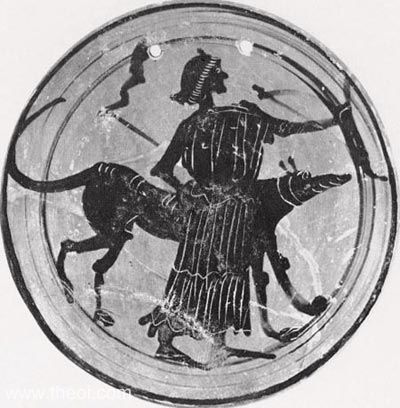
Artemis or Hecate, via Wikipedia
Artemis, via Wikipedia


In the base of the rocky hill on which the high citadel of the city of Orchitrave is founded, there is a cave, and that cave wends and weaves and winds its way deeper and deeper into the earth, until at last it reaches the starless grey land of the dead, where shades walk aimlessly back and forth forever. This cave is a temple of the Great Goddess. So too is the lighthouse of Balamne, which towers above all other constructions of mankind, and at whose top a great flaming beacon is lit which has burned since time immemorial and will burn evermore. So too is the vast stone circle of Nials, where women dance madly in the winter snows to bring the renewal of spring, and so are the depths of the woods, where only deer and wolf have trod since the world was young, and any place where two roads meet, and wherever the voices of children can be heard. The Great Goddess wears many faces and bears many titles, never called the same thing twice. Her name is no secret, but no man dares speak it, and the women only sing it in the most secret places for the most sacred and occulted rituals. One more thing there is that all can agree upon: in each hand she bears a torch, for she is the one who lights the way: for travelers, for seekers, for witches, for kings, for newborn babes and the shades of the dead, for hunters and hunted, for watchmen and warriors. She is alight at both ends.

Class: Amphipyros


Skills: Midwifery and 1d3: 1. Astrology, 2. Poisons, 3. Leechcraft
 
Starting Equipment: 7 torches of pitch, linen, and cypress (⅓ slots each); a bronze ritual dagger (⅓ slots, profaned by touching blood); a stone ritual dagger (⅓ slots, profaned by touching wine); a black robe (1 slot carried, 0 slots when worn, +1 stealth); a white robe (1 slot carried, 0 slots when worn, +1 save); and a loyal, intelligent dog (½ HD, 1d6 bite, excellent sense of smell).
 
A: Best and Most Beautiful, Light-Bearer, 2 Flares
B: Honor Also in Starry Heaven, +1 Flare
C: The Rotting Goddess, +1 Flare
D: Mysteries Within Mysteries, +2 Flares
 
Best and Most Beautiful: As a virgin priestess of a virgin goddess, you have +2 reaction with dogs and the god-fearing, and -1 reaction with men. If you ever enter a man's house or violate your chastity, you become ritually impure and may not use any of your abilities from this class. To purify yourself, you must sacrifice a doe, burning its fat so that it reaches the heavens, and bathe in a river under the moon. You may sacrifice an buck, pouring its blood into a pit in the earth, to learn the will of the Great Goddess. She loves cypresses, dogs, witches, and children, and hates that which all gods hate: unfaithfulness to herself and herself alone.
 
Light-Bearer: When holding a torch in your hand, you may expend a Flare to cause the torch to burst into divine flame, activating an Aura you know. The Aura lasts for as long as the torch burns (typically 6 turns/1 hour) and extends to the edge of the torchlight (typically a 30 foot radius). Only one Aura may be applied to a given torch, but after it has been activated, a torch need not be held by you or near you to apply its effect. You may prepare [templates] + 2 Auras, each of which is depleted once used (you may, of course, prepare duplicates). Flares and Auras refresh at the witching hour.
 
Honor Also in Starry Heaven: On the new moon, full moon, equinox, solstice, and when two wandering stars align, gain +1 MD for the duration of the celestial convergence. If multiple of these events coincide, the MD from each of them stack. Learn two spells, rolled on 1d8 from the list. Roll another to learn at C template, and pick one at D template. If you roll a Mishap or a Doom, the Great Goddess will decree a task for you to complete before you can draw on the heavens again.
 
The Rotting Goddess: In imitation of your goddess, you may shift your form and perception whenever it suits you. Your visage is always recognizably your own, but you might appear one moment youthful and callow, the next maidenly and fair or matronly and kind, wizened and decrepit or pallid and decaying. For extra effect, you may even bear up to three faces on one body at once, though the effort involved means that after no more than an hour of this appearance, you will revert to your original form for at least a day.
 
Mysteries Within Mysteries: You learn the deepest truths and secrets and rites of worship. If you find or commission a suitable idol and set it up in a suitable sanctuary, you may establish a temple of the Great Goddess in truth. Around it will grow up a city, and the city will prosper under her patronage and yours, for though she is a goddess of the earth, of death, of the hidden places, so too is she a goddess who stands before the gate, who protects mothers and children, who brings renewal and growth.
 
Auras:
1. That Turns Away Evil: Soft, indistinct, yet pure and all-pervading and silvery-white, like the moon on a foggy night. All spirits, shapeshifters, restless dead, and evil men must save to enter the light and have disadvantage on all saves and Morale rolls once within it. Furthermore, shapeshifters and the restless dead take 1d4 damage per round within the light and, if destroyed, have their shades put to rest and returned to whence they belong.
2. Before the Gate: Bright, cheerful, warm, and dancing to an unheard tune, like a campfire which holds the night at bay. Within the light, you and your allies have +2 to all saves, and the torch's holder may shorten the torch's life by 1 turn to reduce an instance of damage that an ally receives by 1 point.
3. Who Frequents Crossroads: Singular, precise, and distant, comforting in its solemn loneliness, like a lighthouse sighted from afar. From outside the light, its radiance is not visible, and all within the light seem but a faded grey mirage. Those within count as traveling without light for the purposes of surprising those without (5-in-6 chance of surprise), but are not so subject to surprise themselves (1-in-6 chance of surprise as normal).
4. Holding the Keys: Shimmering with brazen, silvered, gilded threads weaving and unweaving an intricate pattern, like a language that no man can speak. The first time a given lock, ward, or knot enters the light, it has a 3-in-6 chance of unlocking or unraveling. Each time a binding is so undone, the torch's life is shortened by 1 turn. If a binding is not undone, you may not attempt to burst it asunder again until you have gained a level.
5. The Best Advisor: Deep blue in the center, flaring with white pinpricks, and fading to blacker than black on the edges, like the twilit sky fading to obscure easterly night. Within the light, all magical effects are made known, twisting at the edges of vision like the shapes which dance behind your eyelids. Traps and secret doors similarly have a 4-in-6 chance to make themselves known.
6. Bowstring in Tension: Golden-bright, burning sharp in the pupil, like an arrow falling from the sun-blind sky to pierce your eye. All ranged attacks made from within the light have +1d4 to-hit, deal +1d4 damage, and have their range bands doubled.
7. Wide-Ruling: Scintillating with a thousand twinkling lights in every color imaginable, like a vast hoard of priceless jewels suddenly exposed to lamplight. Within the light, your allies have +2 Morale and are immune to fear effects so long as you stand with them.
8. Queen of the Animals: Flaring with proud green and gold like sunlight through the leaves, like wings spread wide, enfolding, protecting, taking flight. Within the light, you speak the tongue of the beasts and the birds, which also gives you +2 reaction with them. If you give them an order, they must save or obey.
9. She Who Gives Victory: Martial and proud and innumerable, like the banners of a great army marching in serried ranks to the horizon and beyond. Within the light, you and your allies have +1 AC, +1 to-hit, +1 damage, and +1 initiative.
10. Of the Wolf: Bold and crimson, hot and steaming, like entrails spilled in the snow, melting a hole in the untouched drifts with the futile strength of their will to live. Within the light, all tracks have a 10-in-10 chance to be clearly limned with intangible blood, with that chance reduced by 1 for every day since their maker left them. If the torch is totally full with life, extinguish it instantly to learn the exact direction and distance to a quarry whose name you know.
11. Singer of Divine Songs: Golden and purple and other colors not truly perceptible to the eyes of mortals, ever-shifting in realms the mind cannot comprehend, like the ichor and ambrosia and clothes and visages of the gods themselves. For every turn spent in the light, those within heal 1 HP. If accompanied by your sacred song that turn (incurring a wandering monster check), the healing increases to 1d4 HP, and each expended MD possessed by those within the light has a 1-in-6 chance of returning to their pool.
12. Bright: Brilliant beyond brilliance and clear beyond clarity, such that all who behold it are dazzled and blinded for a moment, like a star come to earth to grace us with her immortal glory. The radius of this light extends however far the wielder wishes it, even beyond the horizon should they so choose, and they may shape it into the narrowest beam or widest corona or anywhere in between. Unlike the light of any other ephemeral wavering torch, it banishes even magical darkness, and in it, all detail and color may be perceived in richness, sharpness, and clarity even greater than they might display in the most direct sunlight.
 
Spells:
1. Bestow/Remove Curse: Lay with your words a fitting curse on one who can hear you and who has done you ill. Set a just condition for its removal. If the condition is not met, the curse expires in [dice] years and [dice] days—but if cast with 4 MD or more, it is permanent. Alternatively, remove a curse from one who you touch with your bare hand. If the curse was laid by a power greater than yourself, you have a [dice]-in-6 chance of success.
2. Crown of Stars: [sum] scorching stars materialize in orbit around your head, forcing all who see you to roll Morale at -[dice] and either grovel or flee. 1 star winks out per minute since you cast the spell. At will, you may hurl any number of stars at a foe within sight, dealing 1 damage which cannot be avoided or reduced in any way.
3. Darkness: An area of your choosing, no greater than [sum] furlongs square, is instantly consumed by a cloud of utterly impenetrable blackness. Any caught within it must save vs fear or collapse to the ground wailing in despair. It lasts 1 day/1 week/1 month/1 year/forever, depending on [dice].
4. Continual Flame: Allow a flame to burn you; it will consume no fuel nor spread any further, but will cast light and heat until the end of your enchantment. It lasts 1 day/1 week/1 month/1 year/forever, depending on [dice]. This allows Auras to last far beyond their usual measure, but all Flares and prepared Auras invested in Continual Flames cannot be recovered until the flame is extinguished.
5. Speak With Dead: You may ask [sum] questions of a corpse or multiple corpses, which they will answer as truthfully as they can with what they knew in life and what little knowledge they have garnered afterwards. Alternatively, wrest control of [sum] + [dice] HD of undead with no save, for no longer than [sum] hours. If you do not return them to their rest, the Great Goddess will know, and she will punish you.
6. Lay On Hands: If used to touch someone who is about to die, they are stabilized immediately. If used to touch a permanent wound or the sufferer of an intractable disease, the wound or disease has a [dice] + 2-in-6 chance of being healed.
7. Protection from Evil: Weave a web of protection with fragrant oils and smokes costing 10 drachmae per 5 feet of circumference around a person, place, thing, or whatever else. The next [dice] times it would be crippled, destroyed, mortally wounded, invaded, or burned, it isn't.
8. Plague: Whisper horrid curses in the streets or pathways of a place where people gather. The next day, an implacable plague will strike them, killing at least [dice] × 10% of them within a fortnight.

Thursday, February 13, 2025

Heavy With the Fruit of Prophetic Dreaming (GLOG Class: Bard)

Alpine forget-me-not via Wikipedia
There is no such thing as a new story. There are but endless retellings, ripped apart and sewn together again like ransom notes from a heap of unwanted magazines. Which is to say: your life is a faded diorama of a long-forgotten poem. Perhaps, if you try your very hardest, you can weave in an age-old theme which blossoms into a million tiny perfect flowers in the light of this dying age.
 

Class: Bard

 
Starting Equipment: Every song and poem and phrase and voice and word you've ever heard.

A: Clay; +1 reaction
B: Glass; +1 HP
C: Ink; +1 save
D: Ash; +1 reaction
 
Clay: Stare into the labyrinthine depths of the cruel golden Sun. He will shrive you of your innocence and your ignorance and your staring sparkling eyes that drink up light like an alcoholic drinks spirits. In return for your gift, he will place orbs of dull unseeing clay in your scarred sockets, scriven all over with writhing skeletal runes encoding beautiful secrets you can never read. Your new eyes will be blind as the dirt from which they were ripped, but they will whisper to you always, slender insinuations of the straw-bright threads which link all things. Masters and slaves, lovers and lovers, stories and themes, spells and mages, secret doors and hidden levers: you will know the tendons which weave the world. You need but ask. If you pluck a golden thread and sing to its thrumming with your sliver-sharp voice, all who hear must save or still in fascination as tears pour down their cheeks.

Glass: Stand before the vast, uncaring Sea and bare yourself utterly. Clothes, pretenses, personae, rhetoric, skin: you must shed them all to reveal the wet, pulsing flesh beneath, the veins coursing with carmine thoughts, the intestines convulsing with love and anguish. Your audience will know you, and they will love you. In return for your gift, they will lick you all over where your skin once was, your knees and thighs and wrists and shoulders and breasts and ears. Where the tongues, foaming and salty, have been, your new skin will grow. It will be hard and transparent and cool—strictly, it will not be glass but some strange unearthly metal—but when touched by aught other than yourself, it will scorch away fabric and flesh alive in a burst of heat. All the machinery that composes you will forever be exposed to the searching eye, breathing and pumping beneath your impenetrable skin. You will be immune to external physical harm, and any who lay hands on you will take 1d6 damage per round. If someone you loves cries out in pain and you can hear it, you can choose to take the damage instead of them.

Ink: Climb atop the highest peak of the land, whether it be stone or steel, and weep joyous tragic bittersweet tears from your blind clay eyes like handfuls of glittering gem-dust thrown into the laughing Wind. Tears are not all she demands; she will blend your courage and your bones and your teeth into a slurry and drink them down with a raw egg. You don't need them, after all, with your lovely corundum shell to keep you standing and protect you from harm. In return for your gift, your heart and glands and marrow will course anew with fresh fluid, their erstwhile charges replaced with black, indelible ink. Your blood will stain your veins, your saliva will stain your tongue, your lymph will stain your nodes, your tears will stain the corners of your eyes, your urine will stain your groin, your milk will stain your nipples. The very cushion in which floats your brain will stain every inch of your mind. What remains of you now but this sad muddy slime of organs in a perfect leaded-glass vase? All who look can see your dissolution—but your words can never be erased, for your ink is eternal. Put to paper the tale, heroic or tragic, of someone you love, and spread it. They may add +1 to any number they wish on their character sheet. You may not do this more than once per person, and each must choose a different number to affect. If you incite a crowd to action by invoking such a tale, they will not be quelled until their goal is achieved.

Ash: You have received many gifts, from Sun and Sea and Wind. This is not a gift. It is yours. You have learned—or perhaps created?—a new word, and this word is Truth. When you speak it, your perfect ink-stained song-singing tongue will burn to ash in an instant. Your effluvia will clear miraculously, no longer blighted by darkness. Your bones and teeth will grow again from naught in their proper places. Your skin will soften and warm and grow opaque. Your eyes will appear once again in your skull, untouched by unbearable brightness. In return for your gift, you may dictate one eternal fact, which will forever reign in heaven as on earth, carved into the firmament and the bedrock and all other stones that are and all other stones that will be. Your tongue will never return. Your new-written stories will vanish in time, as all mortal things do. But your old stories and your Truth; those will never die. 

Inspired by "Death Dance for a Poet" by Audre Lorde, which I cannot find a good transcription of online. It's in the collection The Black Unicorn (1978).

Wednesday, March 1, 2023

Of Him the Harpers Sadly Sing (GLOG Class: Bard)

Nu sculon heriÄ¡ean    heofonriÄ‹es Weard
Now we must praise    heaven-kingdom's guardian,
Meotodes meahte    and his modÄ¡eþanc
the Measurer's might    and his mind-plans,
weorc Wuldor-Fæder    swa he wundra Ä¡ehwæs
the work of the Glory-Father,    when he of wonders every one,
eÄ‹e Drihten    or onstealde
eternal Lord,    the beginning established.
He ærest sceop    ielda bearnum
He first created    for men's sons
heofon to hrofe    haliÄ¡ Scyppend
heaven as a roof,    holy Creator;
ða middanÄ¡eard    moncynnes Weard
then middle-earth    mankind's guardian,
eÄ‹e Drihten    æfter teode
eternal Lord,    afterwards made—
firum foldan    Frea ælmihtiÄ¡
for men earth,    Master almighty.
    – "Cædmon's Hymn", by Cædmon c. 658-680 CE
I've decided to start rewriting the Carolingia classes as part of the total reworking of the hack that I plan to do, and the old Chanter seemed like a good place to start, since I really don't like it much and I think I'm going to remove conventional GLOG spellcasters from the game entirely, or nearly so.
 
Starting Equipment: A harp or other instrument, a leather helm, a small shield, and a weapon of your choice.

Skills: Music, Poetry, and 1d3: 1. Folklore, 2. Religion, 3. History
 
Damage: 1d8
 
A: Battle Cry, Beloved Voice, Legend-Smith
B: Tales of Heroism, +1 to-hit
C: Boiled Alive, Songs of Lore, +1 Save
D: Weeping Stones, +1 to-hit

Battle Cry: If you call out a battle cry at the beginning of a fight, your allies each regain 1 hitpoint immediately and gain +1 to-hit for the rest of the battle, while your enemies take a -1 penalty to Morale for the rest of the battle. However, if in a dungeon or other dangerous area, this immediately provokes a wandering monster check. 
 
Beloved Voice: When you let it be known that you are a teller of tales and a singer of songs, you gain +1 to reaction rolls with intelligent beings. This can be accomplished by reciting a song or poem, even if the listeners do not understand the language it is in. There will always be food and space in the mead hall for you, provided you perform. 

Legend-Smith: If you compose and recite a poem or song regarding an adventure (or misadventure) that the party got into, all involved characters gain 10 XP. Yes, you must actually write it and recite it. No, it does not have to be good, or long. It just has to exist. You cannot gain this XP for multiple events that happened in the same session.

Tales of Heroism: You know two of the following tales, rolled on 1d8, and may roll another for each further template of Bard you gain. Reciting a tale takes 10 minutes, at the end of which, everyone who heard it gains the detailed benefit. No one may benefit from any particular tale more than once per day, and you may perform no more than [templates] tales per day. Bonus points if you actually recite an excerpt from the poem. At the DM's discretion, you may make a poem you composed about the game into a Tale of Heroism, with a negotiated benefit.

1. Beowulf: Gain +1d4 to-hit and +1d4 damage on the next attack you make this day.
2. Cædmon's Hymn: Regain 1d4+level hitpoints.
3. The Dream of the Rood: Reduce the damage of the next attack that hits you this day by 1d4.
4. The Wanderer: Ignore the next 1d4 obstacles that would impede your overland travel on this day.
5. Widsith: If at least one person present speaks a language, all people present are conversant in it for the next 1d6 hours.
6. The Battle of Maldon: During the next fight you participate in on this day, all retainers and levies gain +1 Morale.
7. Wulf and Eadwacer: During the next fight you participate in on this day, when you would roll Death and Dismemberment, roll twice and take the lower.
8. The Seafarer: Adverse weather conditions will not affect your sailing or put your ship in danger for the next 1d12 hours.
 
Boiled Alive: In social situations, delivering a sufficiently cutting insult (and you know the drill at this point; you have to come up with the insult yourself or crowd-source it from your fellow players) will cause the target to wake the next day with a face covered in boils.
 
Songs of Lore: You have a [templates]-in-6 chance of knowing a fact, determined by the DM, about any person, object, creature, polity, or place if you hear the name or a detailed description.

Weeping Stones: The reaction bonus from Beloved Voice increases to +2 and now applies to all creatures, not just intelligent ones, as well as inanimate objects. You gain a further +1 reaction with beasts and inanimate objects for each hour you play and sing to them. On a reaction roll of 12+, beasts will become your loyal companions and natural things will obey your orders. This may not be used to make them act against their nature or harm their kin, but you could ask a stone to split or a tree to move a root, and it would do so.

Tuesday, November 2, 2021

Don't You Know the Way of Men? (Class: Wizard)

Credit Wikipedia

 
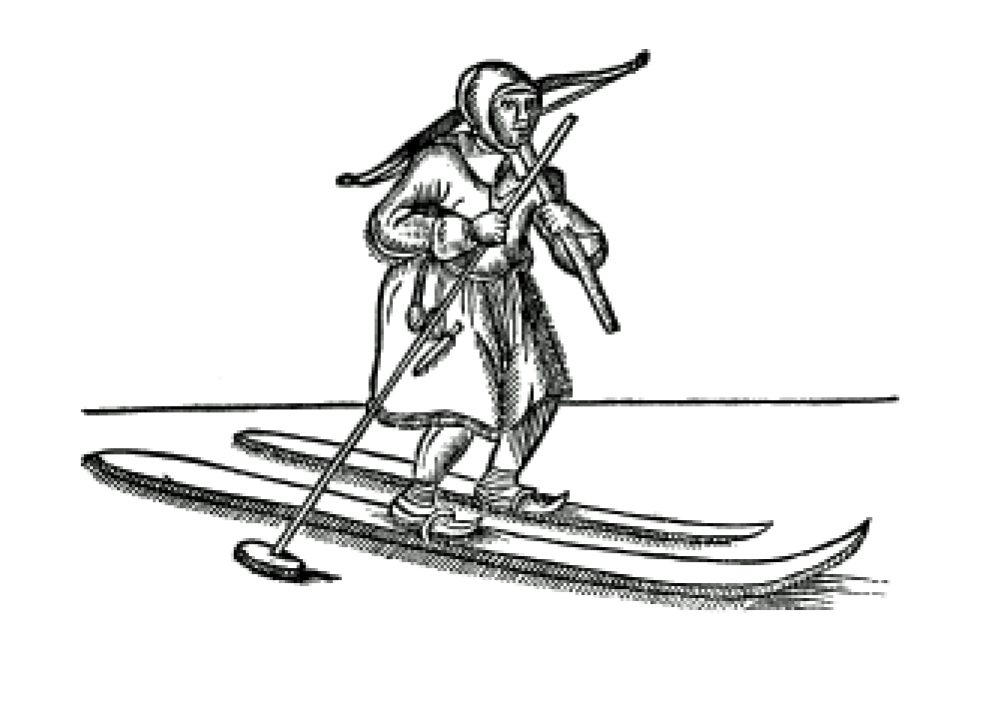
I asked for blogpost ideas, and Locheil said I should make a winter wizard. Ulimately it turned out to be more of an ice wizard and only a little bit of a winter wizard, but so be it.
 
Starting Equipment: A single long pole, a pair of old-fashioned cross-country skis, one weapon of your choice (with 20 ammunition if ranged), a snow globe (explodes into a 30' x 30' x 20' snowbank if shattered).

Skills: Skiing and 1d3: 1. Ice Skating , 2. Ice Fishing, 3. Ice Climbing

A: Hypothermic, Winter's Gift
B: Chillbringer, +1 MD
C: Warding Wind, +1 MD
D: Winter's Harbinger, +1 MD

Hypothermic: Your resting body temperature is 0° C. You are immune to cold weather and magical cold effects unless it's absurdly, unreasonably cold (maybe in the region of -100° C), but you suffer double the effect of heat-related ailments (heat exhaustion, heatstroke, etc). You have resistance to both cold damage and fire damage.

Winter's Gift: You have a pool of d6s known as Microclimate Dice, which function in the exact same manner as Magic Dice. You know 2 spells from your list, rolled on a d6. Roll again with a d8 at B template, a d10 at C template, and a d12 at D template.

Chillbringer: The area within 30' of you is always noticeably colder than the ambient temperature, unless it's already below freezing. If you want, everyone within 5' of you takes 1 damage per round from the cold unless they're wearing winter clothing and extinguishes small flames within the same area. Your touch deals 1d4 damage if it touches flesh or metal armor.

Warding Wind: A chill wind constantly blows around you. Missile attacks against you or targets adjacent to you have -2 to hit. Your aura of cold now deals 1d3 damage per round and can be extended up to 30' away from you. You can move through snow as though it were no obstacle at all.

Winter's Harbinger: The weather in the hex you occupy is always unseasonably cold - summer feels like spring or fall, spring and fall feel like winter, and winter feels like that one winter seventy years your great-grandma told you about. If it's near or below freezing, there's a 3-in-6 chance beyond the usual of snow, hail, or freezing rain (whichever the DM decides is most appropriate). Water freezes at your touch and below your feet.

Spells:  
  1. Snow Cave
    Casting Time:
    10 minutes
    Duration:
    8 hours/days/weeks/months
    Range:
    Touch
    A snow cave that can hold [sum] people appears, either in already existent snow or a snowbank that appears when you cast the spell. The inside of the cave feels like the perfect comfortable temperature for everyone inside. It cannot be entered by any who the caster does not want to allow in, although it can be collapsed or otherwise destroyed. No harmful magical effects can penetrate the cave.
  2. Control Water
    Casting Time: 1 action
    Duration: 0
    Range: 30'
    You can waterbend control any water within range that is not inside a creature. You can freeze, melt, or move up to [dice] ^ 3 cubic feet of water or ice (hitting somebody with this water is Save vs Magic or [sum] damage, freezing them in place is a Save vs Magic to avoid getting trapped and a Save vs Magic each round to escape), or turn [dice] ^ 3 cubic feet of water into ([dice] ^ 3) * 5 cubic feet of fog.
  3. Winter Storm
    Casting Time:
    1 action
    Duration:
    [sum] rounds
    Range:
    60'
    Choose [dice] of the following options to apply to the area within range:
    - Golf-ball hail pours down, dealing 1 damage to everyone not under cover each round.
    - Thick fog fills the air, restricting every creature's sight to a 10' range.
    - Waist-deep snow appears, cutting walking speeds in half.
    - Winds howl, making missile attacks impossible, forcing all creatures to Save or be knocked prone each round, and making hearing impossible beyond 10' away.
    - Black ice covers the ground, making all creatures who move Save or be knocked prone and take 1d6 damage.
    - All flames are immediately extinguished.
  4. Protection from Elements
    Casting Time:
    1 action
    Duration:
    [sum] hours
    Range:
    30'
    For the duration, [sum] creatures within range take [dice] less damage from heat and cold, and are immune to negative effects from temperature.
  5. Speak With Ice
    Casting Time:
    1 action
    Duration:
    [sum] minutes
    Range:
    Self
    For the duration, you can speak with ice in any of its incarnations. It will remember everything that has transpired since it was frozen. Snow is flighty and cheerful, melting ice is grumpy and resentful, glaciers are solemn and wise.
  6. Mulled Cider
    Casting Time:
    10 minutes
    Duration:
    [dice] hours
    Range:
    Touch
    [dice] slots worth of liquid are transformed into spiced and mulled cider, as hot as possible while not burning your throat. No matter the conditions, it will remain hot for the duration, and will persist after that but will cool down. Drinking a slot's-worth (which takes 1 action) heals 1d8 hitpoints if hot and 1d6 if cold. No one can benefit from this healing more than once per day.
  7. Hoarfrost Hauberk
    Casting Time: 1 action
    Duration: [dice] hours
    Range: 0
    You sheathe yourself in a spiked cuirass of ice. This cuirass has [sum] hitpoints, which take damage that would otherwise have damaged you. If an enemy hits you with a melee attack while any of these hitpoints still remain, they take [dice] damage.
  8. Wall of Ice
    Casting Time:
    1 action
    Duration: -
    Range:
    60'
    You create a thick wall of ice within range. This wall can be in any shape with an area of [dice] * [dice] * 200 square feet, and it is [dice] * 5' thick. It cannot intersect any creature. If you enclose a creature, they can Save vs Magic to escape. Each 5' by 5' pillar of ice has 5 HD. The wall lasts until it melts.
  9. Cryogenesis
    Casting Time:
    1 action
    Duration:
    [dice] hours
    Range:
    30'
    Ice within range transforms into animate human forms under your command for the duration. You can create either [dice] 1 HD constructs or 1 construct with [sum] HD. They deal 1d4 damage or the damage of a weapon if they have one. There must be sufficient ice or snow present to create the constructs, and it continues to melt at the normal rate during the spell.
  10. Cone of Cold
    Casting Time: 1 action
    Duration: [dice] minutes
    Range: 30' cone
    All creatures in range must Save vs Magic or take [sum] damage and be slowed by [dice] * 5' for the duration. All water in the area is frozen over.
  11. Flesh to Stone
    Casting Time:
    1 action
    Duration: -
    Range:
    60'
    A creature within range that you can see must Save vs Magic. If they have [dice] or fewer HD, they are turned to stone on a failure. On a success, they instead gain [dice] AC and have their speed halved as they are partially petrified. If the spell is cast on them a second time, they will be petrified with no save. If they have more than [dice], they are unaffected on a success and partially petrified as above on a failure.
  12. Midwinter Knight
    Casting Time:
    1 action
    Duration:
    [sum] hours
    Range:
    Self
    For the duration, you are clothed in red and white and gain a long bushy white beard, granting you +[dice] AC from the friendliness of your appearance. At will, you can summon a flying sleigh pulled by reindeer. The sleigh can fly at up to [dice] * 100 miles per hour and is invisible to those who bear you ill will. It also contains a list of who's been naughty and who's been nice, and if you arrive at the home of someone on the nice list, it contains a present of elfin manufacture made specifically for them. The present's nature should be agreed upon by yourself and the DM.
Mishaps (d6):
  1. Take 1d6 damage
  2. Take +1 damage from all sources for the next hour
  3. Become deafened for the next 1d4 hours
  4. Catch a nasty cold (1d4 Con disease)
  5. All creatures within 30' must Save or slip on ice and take 1d4 damage
  6. Become frozen inside a huge block of ice for the next 1d4 hours
Dooms:
  1. Your fingers become stiff and necrotic with frostbite. Lose 4 Dex.
  2. Your eyes become clouded with icy cataracts. You cannot see anything farther than 30' away, or 60' with a successful Wis check.
  3. At the start of every week and every time you cast a spell, Save vs Magic. On a success, your speed is halved as you grow stiff and cold. On a failure, turn into a beautiful statue of crystal-clear, pure, sparkling ice.

Friday, July 30, 2021

I Come From the North and the Sea, From the Land Behind the Sun (GLOG Class: Mage)

This class draws heavily from the Mage class in the Old School Essentials zine "Carcass Crawler Volume 1", as well as, you know, Gandalf. 

Magic has long been tamed. Gone are the days of binding unruly spirits to your will, of spell failure and horrible accidents, of Doomed sorcerers laying waste to entire nations. You weren't apprenticed to a tower-bound recluse; you studied for years in a state-sponsored school designed to produce high-functioning servants of the empire. Now your allegiance has faltered, for whatever reason, and that reliable, standard magic you were taught may prove essential in your journey. Perhaps you'll unearth older, freer arts of magic along the way, and bring them to light.
 
Starting Equipment: A staff inlaid with runes in bronze wire or a bronze ritual dagger, fancy robes, a two-shot derringer with 4 rounds, a notebook, a pen that writes in your blood without requiring an open wound (just takes it straight from your veins), and an addiction to nicotine or laudanum.

Skills: Arcana and 1d3: 1. Research, 2. Occultism, 3. Tinkering

A: Dependable Magic
B: +1 Magical Talent, +1 Improved Talent
C: +1 Magical Talent, +1 Improved Talent
D: State Truth, +1 Magical Talent, +1 Improved Talent

Dependable Magic: You are possessed of various magical abilities, which you can perform reliably and at will. Gain 3 Magical Talents from the list below. To use these abilities, you must have a magical implement in your hand (your staff or ritual dagger, for example) and the ability to speak freely. You gain one additional talent and can improve one talent you already possess for each template of Wizard you take.

State Truth: You have a pool of 15 words, with which you can make statements that will become absolute truth. Every word you use in these statements is subtracted from your pool, which can never be refilled. The DM should be charitable with their interpretation of the truths and consider your intent. The truths you create do not necessarily persist indefinitely or apply universally, depending on the magnitude: if you say "The Sun is gone," the Sun will only disappear for a few minutes and the effect will be confined to your local area, but if you say, "I am holding a magical sword," the materialized sword may well be permanent. Exceptionally powerful creatures and sorcerers may attempt to defy your truths. You and they both roll a Charisma check, and the winner's view of reality prevails.

Magical Talents

First, a digression: many of the below abilities refer to more and less powerful magic than your own. Generally, the power of any given magic is the level of the caster plus the number of MD used, if any. If the DM doesn't have any clue what that might be, they can roll (probably on 1d3 or 1d4, maybe higher for particularly powerful effects). If there's a tie, unless there's a specific edge case (as with Antimagic below), the casters should roll opposed Charisma checks to see who is more powerful.
 
1. Detect Magic: 10 minutes of searching allow you to detect any magic within a room or a 50' x 50' area, whichever is smaller. You can see invisible spirits and creatures as indistinct shades. 
Improved Detect Magic: You can see magic and spirits with the naked eye.
 
2. Hold: You can seal any door, lid, or other object that can be opened and closed for [template] minutes. For this duration, it can only be opened with magic more powerful than your own or by completely destroying the affected object. 
Improved Hold: If you choose, the duration of your Hold on objects is indefinite. You can also Hold creatures with less HD than your templates in this class for [template] rounds, and they can Save to escape every round.

3. Open: You can instantly open any door, lid, restraint, or other object that can be opened, even if it is locked or sealed. Magic more powerful than your own can prevent this. 
Improved Open: You can attempt to open creatures. They must Save, taking 2d6+[templates] damage on a failure and half as much on a success.

4. Mantle: Your allies have +2 to Saves and Morale when within 30' of you. When you want to, you bring a sense of lightness and purity wherever you go. When you are cloaked, you are unidentifiable to anyone who doesn't succeed a Save. 
Improved Mantle: You may take 2d6 damage to cause [template]*2 creatures you can see with no more HD than [template] must Save or become terrified of you for 1d6 minutes.You may also attempt to use this on a single creature with more HD than [template].

5. Antimagic: You may attempt to cancel any magic you are aware of. You have a 5-in-6 chance of defeating magic weaker than your own, a 3-in-6 chance against magic roughly equal in power to your own, and a 1-in-6 chance against magic stronger than your own. This takes an instant for immediate effects, or an hour for permanent enchantments. Temporary effects are immediately ended, while permanent effects are suppressed for 10 minutes. 
Improved Antimagic: You may take 1 damage to automatically succeed on Antimagic rolls against weaker magic, 1d6 against equal magic, and 3d6 against stronger magic.

6. Staff: If using a staff created specifically for your use as a mage's tool (the one from your starting equipment counts), it deals magical damage. It can also radiate light in a 30' radius for [template] hours per day. 
Improved Staff: Your staff has +2 to hit and +1 damage. Supernatural creatures that bear you ill will take 1d6+[template] damage and must check Morale when they enter the light of your staff.

7. Fire: You may light fires by touching your magical implement to flammable objects. This fire is unnaturally virulent, spreading quickly and easily lighting things not usually easily burned (such as creatures). 
Improved Fire: You can take 1d8 damage in order to light an area as large as 20' x 20' on fire. 

8. Suggestion: You may give a creature who can understand you a command, which they must Save against or follow for [template] rounds. They have a bonus to this Save equal to the number of words in the command. This command cannot be directly harmful to them. Regardless of whether they Save or not, they are aware that you attempted or succeeded to magically compel them. 
Improved Suggestion: When you use your Suggestion on a creature with less HD than [template], they either do not get a Save or must obey your command for [template] hours (your choice).

9. Locate: If you have a map of an area, you may perform a 1 hour ritual to pinpoint a specifically named object or creature on that map. Magic more powerful than your own may hide your target, unless you possess a fragment or bodily material from it. 
Improved Locate: The regular Locate ritual only takes you 10 minutes. You may perform the full hour-long ritual to also highlight the fastest (but not necessarily safest or most practical) route to your target.

10. Obscure: You can create thick fog banks that block all sight around anything you can currently see, which dissipate in [template]*10 minutes, or faster in strong wind. Any creature you do not specifically exempt has a 2-in-6 of becoming lost inside the fog, unless they know the terrain well or it would be an impossibility to get lost. 
Improved Obscure: You can perform a ritual to protect a person, place, or object from detection. Performing it on a person or object takes 10 minutes, and they are either unable to be detected by magical means for [template] days or have a 4-in-6 chance to avoid unwanted notice for [template] hours (your choice). Performing it on a place protects it from magical detection for [template]^2   years, and anyone who seeks it or would stumble upon it have a 5-in-6 chance of getting lost and missing it, unless they are specifically exempted by name during the ritual.

Tuesday, July 27, 2021

And She Was a Radiant Blaze Flooding All of the Void (GLOG Classes: Paladin and Thief)

This post steals heavily from Vayra and Vulnavia's paladins.
 
You have been blessed by the valorous Sun or the all-seeing Moon. It was evident from the very moment your eyes first opened and scintillated as radiantly as light pouring through a bright topaz or pale aquamarine. Why, then, being holy to the G-ds who govern us all, are you not perched on a mahogany throne in a cathedral being fed sweetmeats and grapes by silken-robed attendants? Indeed, many Sun-Kissed and Moon-Kissed are doing so at this very moment, but you are stronger than they, and braver. The Church claims to be the source of all moral authority. You know better. Go forth into the world, and shed light where e'er you go.

The Sun-Kissed

Starting Equipment: Two gilded double-action revolvers with 6 rounds each or a gilded greatsword, a brass gorget in the shape of the sun's rays, a vial of laudanum, 3 gauze bandages, and an amber lens through which souls can be seen.
 
Skills: Passionate Heroism and 1d3: 1. Theology, 2. Horsemanship, 3. Wrestling

For every template of Sun-Kissed you have, gain +1 Save.
 
A: Her Chosen Soul
B: Beloved of the Innocent, +1 to-hit
C: Healing Tears, Molten Blood
D: Mantled With Divine Flame, +1 to-hit

Her Chosen Soul: You were selected and marked by the divine Sun, She Whose Light Burns Evil. While you are conscious, your golden eyes glow unless you actively suppress it, providing light in a 10' cone. You can choose to extend this to a 60' cone at the cost of 1 Fatigue per hour. Your Charisma score is 16 if it wasn't already higher. If you truly believe that an action is right and perform it in the coolest, most badass way possible, you can choose to use Charisma for the roll (if any is required) rather than whatever the relevant skill or ability score would have been.

Beloved of the Innocent: Children and animals adore you and will not attack you under any circumstances. The truly pure-hearted will always recognize you, and you can recognize them.

Healing Tears: If you weep on a wound, illness, curse, or other affliction, it will be healed instantly. If you don't think you have the emotional connection to justify natural tears, you can make a Charisma check to cry at will.

Molten Blood: Literal molten gold flows through your veins. If you are wounded in a way that would draw blood, the cause of the wound must Save or be sprayed (1 wound at -1 severity, automatic blindness if it hits the face). If you deliberately draw your own blood, every coin's worth of gold acts as a wound of 1 severity.

Mantled With Divine Flame: You can, at will, summon a crown of flames to grace your brow. This provides light in a 30' radius and gives +2 to reaction rolls, -2 to enemy morale rolls, and +2 to allied morale rolls and Saves.

The Moon-Kissed

Starting Equipment: Three silvered throwing knives or a silvered sword-cane, a two-shot derringer with 4 rounds, a grappling hook and 60' of rope, a pouch of lockpicks, a silver-gray cloak that's only shiny when you want it to be, and a glass orb filled with shadows that will fill a 50' by 50' area when the orb is smashed.

Skills: Thievery and 1d3: 1. Theology, 2. Climbing, 3. Arcana

For every template of Moon-Kissed you have, gain +1 Stealth.

A: His Chosen Soul
B: Hands of a Tinker, +1 to-hit
C: All-Knowing Eye
D: Cloaked in Divine Shadow, +1 to-hit

His Chosen Soul: You were selected and marked by the divine Moon, He Whose Light Reveals Truth. Your silver-blue eyes glow at will, providing light in a 10' cone. You can choose to extend this to a 60' cone at the cost of 1 Fatigue per hour. Your Charisma score is 16 if it wasn't already higher. If you truly believe that an action requiring subterfuge, finesse, or cunning is right, you can choose to use Charisma for the roll (if any is required) rather than whatever the relevant skill or ability score would have been.
 
Hands of a Tinker: Upon touching a mechanical or magical device, you intuitively know how to operate it, render it inoperable, and subvert its functioning to your purposes. You can do any of the above expertly.
 
All-Knowing Eye: When your eyes cast light on an object or person, you know the following: 
  • Whether it is magical or not.
  • The nature, effect, and function of any magic affecting it.
  • The meaning of any text on it, regardless of language and script.
  • The cultural significance of any relevant symbolism.
Cloaked in Divine Shadow: You can, at will, summon a cloak woven of shadow from the æther. While in this cloak, you are completely invisible except for your shadow, even to effects which detect magic. Anyone other than you who touches this cloak must Save vs Magic. On a failure, if they have less HD than your level, they fall asleep for 1d4 hours or until roused. If they have more HD than your level or HD equal to your level, they instead become drowsy and disorientated for 1d6 rounds.

Tuesday, June 15, 2021

GLOG: The Berserker

A Berserker, to go with the Ranger, Druid, and Paladin that I've written recently. In traditional D&D parlance you might call this a Barbarian, but that framing is neither sensible for my setting nor sensible in general. My thought with this new series of classes is that I might add them to Carolingia as "advanced classes", where you get a somewhat stronger and more directly flavorful class at the cost of starting as someone else's retainer (perhaps even another PC's) rather than with your own domain. The obvious role for this class specifically is as a Norse berserker, but there's also certainly a niche for it as a Cu Chulainn-type.
 
Starting Equipment: A bearskin cloak with head, a mail shirt, a bearded axe or sword, a shield, a sack of hallucinogenic mushrooms (3 doses), and a flat river stone bearing the runes ᚦᛚᛘ (thur lögr maðr).

Skills: Wrestling and 1d3: 1. Sailing, 2. Drinking, 3. Scar-Reading

For every template of Berserker you have, gain +1 HP. Every second template, gain +1 to-hit.

A: Berserk Rage, Cunning Forager
B: Indomitable
C: Immovable, Terrifying Onslaught
D: Inexorable
 
Berserk Rage: You may enter a berserk rage at will. When in a rage, you may attack twice per round rather than just once, but you may only act violently, not constructively, creatively, collaboratively, or prudently. This rage lasts 2d3+[template] rounds or until all present enemies are dead, incapacitated, or beyond your ability to pursue. If any of your allies attempt to prevent you from committing violence, they become enemies as well. If you take hallucinogens before entering the rage, you also gain +1 HP per template (subtracted from your current total when the rage ends) and +1 to-hit for the duration.
 
Cunning Forager: Over the course of 6 hours in the wilderness, you can always find and prepare either 1 dose of hallucinogens or 1 ration.
 
Indomitable: When in a rage, if you roll on the Death and Dismemberment table, ignore any result short of instant death until the rage ends. You are also immune to fear, charm, and sleep effects while raging. If you have a steady supply of recreational drugs, wounds heal twice as quickly.
 
Immovable: You cannot be moved against your will under any circumstances while conscious. You take only half damage from poison, and have a 50% chance of ignoring the effects of poisons which do not deal damage.
 
Terrifying Onslaught: The first time you attack a given foe while raging, you can force them to check morale. You cannot use this ability twice on the same foe in the same combat.
 
Inexorable: While raging you may add +7 to Strength checks, skill checks related to physical strength, and grappling rolls. You also gain +1 damage with armed melee attacks and +1d6 with unarmed attacks (assuming unarmed attacks normally deal 1 damage).

Monday, June 14, 2021

GLOG: The Paladin

To follow up on my recent Ranger and Druid classes, here's a Paladin. Mostly I tried to stick to a theme of chivalry, much like the original 12 Peers, also known as Paladins: Charlemagne's semi-mythic companions of the chansons de geste, as well the Knights of the Round Table and similar chivalric romances, while also obeying some of the traditional Paladin tropes. I'm not entirely sure how well I succeeded, because I don't actually think this is a very good class (too many numbers, not enough fictional meat), but I'm just putting it out there now because otherwise I never will. Special thanks to Vayra, deus ex parabola, and SquigBoss for their assistance.
 
Starting Equipment: A mail shirt, a leather helmet, your parent's longsword, three lances, a pair of stirrups, and a shield and tabard both emblazoned with your coat of arms.

Skills: Horsemanship and 1d3: 1. Poetry, 2. Religious Doctrine, 3. Wrestling

For every template of Paladin you have, gain +1 HP and +1 to Save vs Fear and Magic.

A: Faithful Mount, Supernatural Aid
B: Questing Knight
C: Inspiring Leader, Laying On of Hands
D: Glorious Visage
 
Faithful Mount: You have a loyal, brave mount, whose abilities transcend those of a normal horse by far. They are unbreakable (morale 12 in most OSR systems), will come to your side wherever in the world you are with a whistle (takes no more than a day no matter how distant you are), can understand speech and obey your instructions, and will attack your foes even as you do. At A template, this horse has stats as a courser (HD 2+2, Move 80', Atk 1d6 hooves). At B template, they have stats as either a destrier (HD 2+4, Move 60', Atk 1d8 hooves) or a courser as you desire. At C template, they become a unicorn (HD 2+6, Move 80', Atk 1d8 horn/1d6 hooves), and at D template, they become a winged unicorn (HD 3+6, Move 80'/Fly 120', Atk 1d8 horn/1d6 hooves). If your mount dies, a new one will come to your side in 1d4 weeks.

Supernatural Aid: Roll on the following table (1d4): 
  1. You have a fairy godmother, who you can contact by speaking into an acorn. She will aid you if you ask, but will hesitate to perform particularly difficult favors or to perform too many favors within a short duration (absolutely not more than 1 per day). She will not put herself in danger.
  2. You can speak the tongue of the birds.
  3. You have a golden whistle, which you can use to command fire to ignite, move, and go out. The whistle can affect no more than a 1' x 1 'x 1' area of fire at once.
  4. Your parent's sword is actually an ancient relic that, unbeknownst to you, marks you as the true heir to a kingdom (either the one you currently inhabit or an adjacent one). Once you discover this fact, showing this sword and stating what it really is will oblige whoever observes to divulge their true loyalty to you.
 
Questing Knight: You gain a Questing Die, which is a d4. Whenever you are on a quest for a righteous goal, given by a righteous person (a brave king, an innocent maiden, an unfairly disgraced squire, your chaste and handsome lover), you may add this die to any die roll you make in direct service of that quest - skill checks, attack rolls, and damage rolls, as well as any other relevant rolls. You may also use your Questing Die when performing other chivalrous actions: protecting the weak, defending your honor or the honor of an innocent, acting in loyalty to your liege without considering your own interest, attacking a traitor or evil sorcerer. This die increases to a d6 at D template. If you roll maximum on your Questing Die, you cannot use it again until you rest. If you break the chivalrous code, you lose all Paladin class abilities until you complete an extremely difficult quest of penance.

Inspiring Leader: Your allies get +1 to Save vs Fear when within 20 feet of you and your hirelings have +1 morale.

Laying On of Hands: You have a pool of [template] * 2 hitpoints, which replenish every time you rest. When you touch an injured creature, not including yourself, you may heal them by touching them and transferring any amount of these hitpoints to them. Once your pool runs out, you may still transfer hitpoints subtracted directly from your own. Your touch also has a [template]-in-8 chance of curing disease, infirmity, and minor injuries, which may only be attempted once per affliction.

Glorious Visage: You can mantle a golden halo of light at will, which casts light within 5'. While this halo is active, you have +2 to reaction rolls with the righteous, your enemies have -1 morale and must check morale upon seeing the halo, and your allies have +1 morale.

Thursday, June 10, 2021

GLOG: The Druid

I had fun writing a Ranger class earlier this week, so I figured I'd try to give a similar treatment to the Druid. I tried to give it an interesting way of switching out spells, allowing great versatility if you can travel freely between holy sites, as well as the standard Druid stuff of turning into animals, talking to animals, and murdering the Archdruid to take their place. I'm not sure how well the spell preparation will actually work in practice, but it will depend heavily on the campaign. The Druid also gets access to some rather powerful and often incredibly destructive spells if they can find great holy sites - not useful in most games, probably, but it's fun to think about. I did steal a good deal from various of  Ursula Le Guin's young adult novels, but that's pretty much a constant with my stuff.
 
Starting Equipment: A stout staff, a fur cloak, a jar of woad, a small bag of deadly nightshade, and a bone dagger.

Skills: Woodlore and 1d3: 1. Medicine, 2. Astronomy, 3. Stone Carving

A: Land's Warden, Wild's Caller, +1 MD
B: Beast's Form, +1 MD
C: Bird's Flight, +1 MD
D: Archdruid's Challenge, +1 MD

Land's Warden: When you spend the night under the stars at a holy site of druidic significance - a standing stone, a great grove of trees, a high hill, or a pure spring - you may choose to prepare a spell. Roll a d4 on the table for that location type. You may cast the spell selected until you choose to replace it with a different spell. If you roll a spell you already have prepared, you may pick the spell above or below. You may have [template]+1 spells prepared at any given time. When you prepare a spell at a location, you also gain the cantrip and drawback of that location type, and lose your previous cantrip and drawback. If you prepare at an incredibly significant location - an immense henge, an enormous ancient tree, a tall lone mountain, or a deep hidden pool never disturbed by the wind, you roll a d6 instead of a d4.
 
Wild's Caller: You know the intentions, wants, and emotions of any wild animal you can see, smell, and hear, and can communicate your own to them wordlessly. When in an area where a certain species of animal might be found, you may attempt to call an individual to you over the course of 10 minutes, with a [6 - HD]-in-6 chance of success (An HD of less than 1 counts as 1). You may ask the animal a favor, which it will always perform if its motives are not in conflict with your own and if the favor puts it at no personal risk. If the favor does require risk, the animal only has a [template]-in-6 chance of agreeing. You have +3 on reaction rolls with wild animals, and domesticated dogs hate you with a passion.
 
Beast's Form: You may, at will, transform into any non-flying animal of your choice that you have seen that has no more HD than [template]. All of your attributes become those of the animal, except for your mental ability scores and your hitpoints (generally, HD becomes the modifier to attack rolls, grappling rolls, Strength checks, etc., unless your DM decides different penalty or bonus is reasonable). Any injuries and hitpoint loss are reflected between forms. If you spend more than [template] hours in animal form per day, you must Save or disappear in the wilderness to live out your years as a beast as you forget who you once were. If you succeed, you must repeat the Save every subsequent hour.
 
Bird's Flight: Your Beast's Form now applies to flying as well as non-flying animals. Every 10 minutes you spend as a flying animal counts as an hour spent as a non-flying animal. 

Archdruid's Challenge: When you wish, you may challenge the archdruid, who is the leader, although not ruler, of all druids. The archdruid may name the terms of the challenge, which must be equal for you both. This is often, but certainly not always, a fight to the death or the submission. If you defeat the previous archdruid, you take their position. As archdruid, you may gather 1d4 level 1 druids to your cause with a day's notice and 2d6+1 with a month's notice. You may also touch an animal's forehead to command it for 1d6 hours, although doing so means that you take -2 on reaction rolls with all animals of that species for the next week.

Location Types

 
All the spell descriptions not included below can be found here.

Stone

 
Cantrip: You may read any text, regardless of the script and language, if you study it for 10 minutes.
Drawback: If you use any metal implements or wear any metal armor, you take 1 damage per round.
  1. Detect Magic
  2. Illusion
  3. Mending
  4. Magic Stone
  5. Wall of Stone
  6. Doom of Cities
    Casting Time:
    [dice] days
    Duration: [sum] decades
    Range:
    [dice] miles
    The area within range is doomed. Plants will wither and die, drought or floods or plague will blight it, cities will burn and crumble. Nothing here shall prosper for the duration. Casting this spell requires a human sacrifice.

Wood

 
Cantrip: You can set and douse small fires with a touch.
Drawback: You cannot not read or write.
  1. Entangle
  2. Find the Path
  3. Pass Without Trace
  4. Commune
  5. Wildfire
    Casting Time:
    1 action
    Duration:
    [sum] rounds
    Range:
    60 feet
    [dice] creatures, plants, objects, or structures within range catch fire. Creatures may Save vs Magic to avoid catching fire, and take [dice] damage per round for the duration (or until they take a round to roll on the ground) on a failure. Plants, objects, and structures burn at their normal rate. This fire is incredibly virulent and will spread at the slightest touch and with the slightest breeze, easily destroying a whole forest or city if allowed to. Water puts it out as usual.
  6. Grove
    Casting Time:
    1 action
    Duration:
    3 rounds
    Range:
    60 feet
    The area within [dice] * 10 feet of a point within range sprouts trees of a species of your choice. You can choose for this to be an open, airy grove or a dense, tangled one (halved movement speed within). The trees grow to maturity over the duration. Any structures less solid than a 5 foot thick stone wall in the area will be shattered and rent to pieces, while any as sturdy or stronger than that will be weakened and twisted.
 

Earth

 
Cantrip: You do not need to sleep, although you must rest for the duration you would normally sleep.
Drawback: If you bathe or wash with water, you lose all your MD until you rest.
  1. Mold Earth
  2. Insect Swarm
  3. Charm Animal
  4. Gust of Wind
  5. Blight
  6. Earthquake
    Casting Time:
    1 hour
    Duration:
    10 minutes
    Range:
    [dice] miles
    An earthquake wracks the area around you. [dice] * 25% of the buildings within range are destroyed, mountainsides collapse in landslides, and [sum] earth elementals of various kinds, each with 1d4+1 HD, rise to cause havoc. Within the area, all creatures that walk other than elementals immediately fall prone and must Save vs Magic in order to walk without falling. Anyone inside a collapsing building must Save vs Magic or take [sum] damage, taking [dice] damage on a success. Casting this spell requires [dice] * 100 d. of gemstones and precious metals, as well as a sacrifice of at least a chicken (1 MD), a pig (2 MD), a cow (3 MD), or a human (4 MD).
 

Water

 
Cantrip: You can cause plants to sprout from the earth around your feet and desiccate living plants with a touch.
Drawback: Edged weapons deal 1 extra damage per die to you.
  1. Control Water
  2. Invigorate
  3. Hoarfrost Hauberk
  4. Control Rain
  5. Hurricane
  6. Nature's Mantle
    Casting Time:
    1 action
    Duration:
    [dice] minutes
    Range:
    Self
    For the duration, your head sprouts antlers, your back sprouts a pair of eagles' wings, your fingers and toes claws, your mouth long fangs, and your skin thick hair. You gain a flying speed of 120', a charge attack that deals 4d6 damage if you've moved at least 30', a flurry of 4 claw attacks and 1 bite attack for 1d4 damage each, and +[dice] AC (you cannot charge and use your flurry of attacks in the same round). All enemies that see you transform must check Morale as well as Saving vs Fear, becoming frightened for the duration on a failure. Dogs flee at the sight of you. You automatically roll maximum on reaction rolls with wild animals, and can speak with them freely. They will obey your every command for the duration.