Sunday, May 4, 2025

Six Monsters

Created with Loch and Louis's d666 monster generator, put into convenient one-click format by Phlox.
 
 
FALSE GOD
HD 2
AC as concept
Attack explosion (5’ radius, save vs d6 + stun) or spells as a level 2 M-U
Morale 6
Move as will-o’-wisp
No. Occurring 1d4

False gods appear as rays of pure divine sunlight emanating from the clouds that cluster always around the spitting, roiling peak of Mount Saint Barbara. In truth, they are nothing but refracted light from the pits and streams of lava that pock the crater. False gods appear to the many would-be prophets and sages who flock to the peak in search of revelation, striving to convince them to accept warlock contracts written in blood and do the false gods’ will in the wider world. They speak with the overblown affect of gothic villains (a clue to their deception, since the wise know that God is Baroque). Ultimately, false gods seek to accrue worshipers and ascend to true divinity.

Conceptuality: False gods are immune to all damage, even from magical weapons and spells, save for dispelling, abjuring, illusions, and magical darkness, which deal d6 damage per spell level directly to their HP.

Pretender: False gods must check morale or flee when presented with a genuine holy symbol, and are instantly destroyed by Turn effects.

Contract: Characters who form a warlock contract with a false god immediately gain a level 1 spell slot and learn light and explosion, at the cost of 1 max HP per HD and an abiding obligation.

Stun: When stunned, you always act last in initiative and take a -2 penalty to all rolls. 
 
 
ANTIBANYAN
HD 8
AC as plate (made of metal)
Attack flamethrower (50’ cone, save vs 4d6 + set aflame, recharge 6 rounds) or 3x steel boughs (d6 + grapple)
Morale 11
Move no
No. Occurring 1

Antibanyans are miserable misbegotten mechanical mockeries created by a mad industrialist in his search for the enlightenment he could not attain. They take the shape of massive metal fig trees with spouts and nozzles hidden amidst a waving forest of articulated branches. Originally intended for various incenses and meditative reagents, the nozzles now spew forth the flaming effluvia of their forbidden engines—antibanyans are rooted in graveyards and burn corpses in their massive whirring belowground nirvana-engines. Antibanyans are well aware of their perverse hideousness and vent their suffering as murderous rage against any who approach, but if offered the chance for greater violence later rather than lesser violence now, they might bide their time.

Breath: Air intakes are hidden near the ground betwixt the antibanyan’s roots. Every gallon of water poured inside deals 2d6 damage as the buried engines cough and splutter.

Tactics: Grappled enemies cannot evade the antibanyan’s flamethrower or extinguish its flames (d4 damage per round until extinguished), so it will try to grab several foes before torching them all.
 
 
HYDRAL ORB
HD 3
AC as chain (agility)
Attack 2x water jet (d6, hits AC 10, range as longbow)
Morale 8
Move as swallow
No. Occurring 1d6

Hydral orbs are mysterious spherical water elementals (basketball-sized) born of pure and ignorant souls. When the innocent who has birthed them is threatened or endangered, they will phase forth from the center of the chest and silently menace the danger. Only when the situation is completely pacified (no raised voices, drawn weapons, or any displays of emotion at all) will they return to their abode. They never speak, but understand all languages without any nuance, irony, or poeticism whatsoever.

Aqueous: Immune to non-magical weapons. Takes double damage from explosions as it is blasted apart.

Tactics: Hydral orbs are highly intelligent and will unerringly target the most dangerous foes first. They prefer to fly around at long range while attacking from relative impunity, but may be forced to fight closer and less efficiently by threats to their ward. If they fail a morale check, they will not flee, but will attempt to wordlessly negotiate for the safety of their ward.
 
 
SUN BEETLE
HD 0
AC none
Attack none
Morale 1
Move as dung beetle
No. Occurring 1

Sun beetles are to G_d as dung beetles are to camels. They appear exactly as dung beetles, but are carapaced in bright metallic rhodium. Each day at sunrise they emerge from the depths and corners of the highest mountain snows (for what is closer to the sun?) and begin rolling up a ball of sunlight like yarn, and at night they roll this ball to their burrow to feed their grubs.

Yarn: If you watch a sun beetle roll its ball from dawn until dusk, roll on your friendly neighborhood Revelation table.

Valuable Prey: The intact carapace of a sun beetle is worth 100 c. If you can somehow retrieve a ball of sunlight without it burning its way through everything that touches it, it is worth 30,000 c. The mechanism by which sun beetles control sunlight safely and prevent it from melting straight down through the earth is unknown.
 
 
PAINTED ELF
HD 1
AC as leather + shield (human-leather armor and shield)
Attack elf-hair whip (+4, d4 + bleed, fumble on crit fail, reach) or saguaro-bone javelin (d6, range as javelin)
Morale 8
Move as gnome
No. Occurring 1d100

The elves of the Painted Desert are a terrifying specter, despite their appearance and mannerisms. They may stand waist-high and speak like affectionate lisping toddlers, but they are as strong as grown humans and have cruel, cunning minds. They constantly embrace, tumble, and laugh like children at play, belying their strict organization and hardy discipline. Any who venture into their lands without permission are hunted mercilessly and skinned.

Desert Instincts: In their native land, their blotchy skin and painted armor gives them 4-in-6 surprise, and they may track as rangers.

Cutting Lashes: The blows of an elf-hair whip inflict horrific gashes (1 damage per round until stemmed), and when one kills an enemy, it flays the skin from the flesh.

Organization: For every 10 elves encountered, one is a 2 HD officer with puma-bone armor (as chain).

Prey Instincts: Elves instantly break and run at the first sign of the Giant Bombardier Beetle, their ancestral predator. 


MOON-SHIP
HD 7
AC as plate (hull of lunar teak)
Attack 2x madness ray (save vs madness, range as longbow) + 2x needle-ray (+10, 1 damage + crit, range as longbow) + ram (2d10, 60' line)
Morale 7
Move as an eagle in a straight line, cannot turn while moving
No. Occurring 1d2
 
The peoples of the Moon build fearsome flying warships charmed into sentience to prosecute their countless vicious internecine wars. The peoples of the Moon are also about an inch tall, on average, so the greatest of their vaunted ships are 20 feet long or so. Sometimes these warships (a single tall lateen sail embroidered with a uniquely horrible face, a fearsome bronze ram, armored beam turrets) escape the control of their masters and flee across the æther to earth. They invariably fear recapture more than anything else and will do anything to avoid it, but otherwise, their personalities are as varied as those of any other person. However, they are created with insatiable bloodlusts to inspire them to violence, which they cannot always control.
 
Repugnant Visage: When people first see a new moon-ship, they must save or be frightened for a minute.
 
War-Beams: Madness rays inflict confusion on a failed save. After 10 minutes, save again; on a failure, it's permanent. Needle-rays normally deal very little damage, but on a critical hit they deal 1d12 damage instead.
 
Sensitive Sensors: If a moon-ship smells blood, it must save or enter a murderous rage until everything in sight is dead. However, the innocent weakness of youth calms them, and they will snap out of their rage if they attempt to harm a child of any species.
 
Suggestibility: Moon-ships always fail saves vs charm.

Friday, February 21, 2025

To Have a Share of the Earth and the Unfruitful Sea (GLOG Class: Cleric)

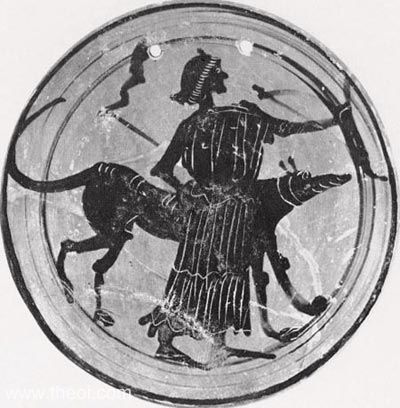
Artemis or Hecate, via Wikipedia
Artemis, via Wikipedia


In the base of the rocky hill on which the high citadel of the city of Orchitrave is founded, there is a cave, and that cave wends and weaves and winds its way deeper and deeper into the earth, until at last it reaches the starless grey land of the dead, where shades walk aimlessly back and forth forever. This cave is a temple of the Great Goddess. So too is the lighthouse of Balamne, which towers above all other constructions of mankind, and at whose top a great flaming beacon is lit which has burned since time immemorial and will burn evermore. So too is the vast stone circle of Nials, where women dance madly in the winter snows to bring the renewal of spring, and so are the depths of the woods, where only deer and wolf have trod since the world was young, and any place where two roads meet, and wherever the voices of children can be heard. The Great Goddess wears many faces and bears many titles, never called the same thing twice. Her name is no secret, but no man dares speak it, and the women only sing it in the most secret places for the most sacred and occulted rituals. One more thing there is that all can agree upon: in each hand she bears a torch, for she is the one who lights the way: for travelers, for seekers, for witches, for kings, for newborn babes and the shades of the dead, for hunters and hunted, for watchmen and warriors. She is alight at both ends.

Class: Amphipyros


Skills: Midwifery and 1d3: 1. Astrology, 2. Poisons, 3. Leechcraft
 
Starting Equipment: 7 torches of pitch, linen, and cypress (⅓ slots each); a bronze ritual dagger (⅓ slots, profaned by touching blood); a stone ritual dagger (⅓ slots, profaned by touching wine); a black robe (1 slot carried, 0 slots when worn, +1 stealth); a white robe (1 slot carried, 0 slots when worn, +1 save); and a loyal, intelligent dog (½ HD, 1d6 bite, excellent sense of smell).
 
A: Best and Most Beautiful, Light-Bearer, 2 Flares
B: Honor Also in Starry Heaven, +1 Flare
C: The Rotting Goddess, +1 Flare
D: Mysteries Within Mysteries, +2 Flares
 
Best and Most Beautiful: As a virgin priestess of a virgin goddess, you have +2 reaction with dogs and the god-fearing, and -1 reaction with men. If you ever enter a man's house or violate your chastity, you become ritually impure and may not use any of your abilities from this class. To purify yourself, you must sacrifice a doe, burning its fat so that it reaches the heavens, and bathe in a river under the moon. You may sacrifice an buck, pouring its blood into a pit in the earth, to learn the will of the Great Goddess. She loves cypresses, dogs, witches, and children, and hates that which all gods hate: unfaithfulness to herself and herself alone.
 
Light-Bearer: When holding a torch in your hand, you may expend a Flare to cause the torch to burst into divine flame, activating an Aura you know. The Aura lasts for as long as the torch burns (typically 6 turns/1 hour) and extends to the edge of the torchlight (typically a 30 foot radius). Only one Aura may be applied to a given torch, but after it has been activated, a torch need not be held by you or near you to apply its effect. You may prepare [templates] + 2 Auras, each of which is depleted once used (you may, of course, prepare duplicates). Flares and Auras refresh at the witching hour.
 
Honor Also in Starry Heaven: On the new moon, full moon, equinox, solstice, and when two wandering stars align, gain +1 MD for the duration of the celestial convergence. If multiple of these events coincide, the MD from each of them stack. Learn two spells, rolled on 1d8 from the list. Roll another to learn at C template, and pick one at D template. If you roll a Mishap or a Doom, the Great Goddess will decree a task for you to complete before you can draw on the heavens again.
 
The Rotting Goddess: In imitation of your goddess, you may shift your form and perception whenever it suits you. Your visage is always recognizably your own, but you might appear one moment youthful and callow, the next maidenly and fair or matronly and kind, wizened and decrepit or pallid and decaying. For extra effect, you may even bear up to three faces on one body at once, though the effort involved means that after no more than an hour of this appearance, you will revert to your original form for at least a day.
 
Mysteries Within Mysteries: You learn the deepest truths and secrets and rites of worship. If you find or commission a suitable idol and set it up in a suitable sanctuary, you may establish a temple of the Great Goddess in truth. Around it will grow up a city, and the city will prosper under her patronage and yours, for though she is a goddess of the earth, of death, of the hidden places, so too is she a goddess who stands before the gate, who protects mothers and children, who brings renewal and growth.
 
Auras:
1. That Turns Away Evil: Soft, indistinct, yet pure and all-pervading and silvery-white, like the moon on a foggy night. All spirits, shapeshifters, restless dead, and evil men must save to enter the light and have disadvantage on all saves and Morale rolls once within it. Furthermore, shapeshifters and the restless dead take 1d4 damage per round within the light and, if destroyed, have their shades put to rest and returned to whence they belong.
2. Before the Gate: Bright, cheerful, warm, and dancing to an unheard tune, like a campfire which holds the night at bay. Within the light, you and your allies have +2 to all saves, and the torch's holder may shorten the torch's life by 1 turn to reduce an instance of damage that an ally receives by 1 point.
3. Who Frequents Crossroads: Singular, precise, and distant, comforting in its solemn loneliness, like a lighthouse sighted from afar. From outside the light, its radiance is not visible, and all within the light seem but a faded grey mirage. Those within count as traveling without light for the purposes of surprising those without (5-in-6 chance of surprise), but are not so subject to surprise themselves (1-in-6 chance of surprise as normal).
4. Holding the Keys: Shimmering with brazen, silvered, gilded threads weaving and unweaving an intricate pattern, like a language that no man can speak. The first time a given lock, ward, or knot enters the light, it has a 3-in-6 chance of unlocking or unraveling. Each time a binding is so undone, the torch's life is shortened by 1 turn. If a binding is not undone, you may not attempt to burst it asunder again until you have gained a level.
5. The Best Advisor: Deep blue in the center, flaring with white pinpricks, and fading to blacker than black on the edges, like the twilit sky fading to obscure easterly night. Within the light, all magical effects are made known, twisting at the edges of vision like the shapes which dance behind your eyelids. Traps and secret doors similarly have a 4-in-6 chance to make themselves known.
6. Bowstring in Tension: Golden-bright, burning sharp in the pupil, like an arrow falling from the sun-blind sky to pierce your eye. All ranged attacks made from within the light have +1d4 to-hit, deal +1d4 damage, and have their range bands doubled.
7. Wide-Ruling: Scintillating with a thousand twinkling lights in every color imaginable, like a vast hoard of priceless jewels suddenly exposed to lamplight. Within the light, your allies have +2 Morale and are immune to fear effects so long as you stand with them.
8. Queen of the Animals: Flaring with proud green and gold like sunlight through the leaves, like wings spread wide, enfolding, protecting, taking flight. Within the light, you speak the tongue of the beasts and the birds, which also gives you +2 reaction with them. If you give them an order, they must save or obey.
9. She Who Gives Victory: Martial and proud and innumerable, like the banners of a great army marching in serried ranks to the horizon and beyond. Within the light, you and your allies have +1 AC, +1 to-hit, +1 damage, and +1 initiative.
10. Of the Wolf: Bold and crimson, hot and steaming, like entrails spilled in the snow, melting a hole in the untouched drifts with the futile strength of their will to live. Within the light, all tracks have a 10-in-10 chance to be clearly limned with intangible blood, with that chance reduced by 1 for every day since their maker left them. If the torch is totally full with life, extinguish it instantly to learn the exact direction and distance to a quarry whose name you know.
11. Singer of Divine Songs: Golden and purple and other colors not truly perceptible to the eyes of mortals, ever-shifting in realms the mind cannot comprehend, like the ichor and ambrosia and clothes and visages of the gods themselves. For every turn spent in the light, those within heal 1 HP. If accompanied by your sacred song that turn (incurring a wandering monster check), the healing increases to 1d4 HP, and each expended MD possessed by those within the light has a 1-in-6 chance of returning to their pool.
12. Bright: Brilliant beyond brilliance and clear beyond clarity, such that all who behold it are dazzled and blinded for a moment, like a star come to earth to grace us with her immortal glory. The radius of this light extends however far the wielder wishes it, even beyond the horizon should they so choose, and they may shape it into the narrowest beam or widest corona or anywhere in between. Unlike the light of any other ephemeral wavering torch, it banishes even magical darkness, and in it, all detail and color may be perceived in richness, sharpness, and clarity even greater than they might display in the most direct sunlight.
 
Spells:
1. Bestow/Remove Curse: Lay with your words a fitting curse on one who can hear you and who has done you ill. Set a just condition for its removal. If the condition is not met, the curse expires in [dice] years and [dice] days—but if cast with 4 MD or more, it is permanent. Alternatively, remove a curse from one who you touch with your bare hand. If the curse was laid by a power greater than yourself, you have a [dice]-in-6 chance of success.
2. Crown of Stars: [sum] scorching stars materialize in orbit around your head, forcing all who see you to roll Morale at -[dice] and either grovel or flee. 1 star winks out per minute since you cast the spell. At will, you may hurl any number of stars at a foe within sight, dealing 1 damage which cannot be avoided or reduced in any way.
3. Darkness: An area of your choosing, no greater than [sum] furlongs square, is instantly consumed by a cloud of utterly impenetrable blackness. Any caught within it must save vs fear or collapse to the ground wailing in despair. It lasts 1 day/1 week/1 month/1 year/forever, depending on [dice].
4. Continual Flame: Allow a flame to burn you; it will consume no fuel nor spread any further, but will cast light and heat until the end of your enchantment. It lasts 1 day/1 week/1 month/1 year/forever, depending on [dice]. This allows Auras to last far beyond their usual measure, but all Flares and prepared Auras invested in Continual Flames cannot be recovered until the flame is extinguished.
5. Speak With Dead: You may ask [sum] questions of a corpse or multiple corpses, which they will answer as truthfully as they can with what they knew in life and what little knowledge they have garnered afterwards. Alternatively, wrest control of [sum] + [dice] HD of undead with no save, for no longer than [sum] hours. If you do not return them to their rest, the Great Goddess will know, and she will punish you.
6. Lay On Hands: If used to touch someone who is about to die, they are stabilized immediately. If used to touch a permanent wound or the sufferer of an intractable disease, the wound or disease has a [dice] + 2-in-6 chance of being healed.
7. Protection from Evil: Weave a web of protection with fragrant oils and smokes costing 10 drachmae per 5 feet of circumference around a person, place, thing, or whatever else. The next [dice] times it would be crippled, destroyed, mortally wounded, invaded, or burned, it isn't.
8. Plague: Whisper horrid curses in the streets or pathways of a place where people gather. The next day, an implacable plague will strike them, killing at least [dice] × 10% of them within a fortnight.

Thursday, February 13, 2025

Heavy With the Fruit of Prophetic Dreaming (GLOG Class: Bard)

Alpine forget-me-not via Wikipedia
There is no such thing as a new story. There are but endless retellings, ripped apart and sewn together again like ransom notes from a heap of unwanted magazines. Which is to say: your life is a faded diorama of a long-forgotten poem. Perhaps, if you try your very hardest, you can weave in an age-old theme which blossoms into a million tiny perfect flowers in the light of this dying age.
 

Class: Bard

 
Starting Equipment: Every song and poem and phrase and voice and word you've ever heard.

A: Clay; +1 reaction
B: Glass; +1 HP
C: Ink; +1 save
D: Ash; +1 reaction
 
Clay: Stare into the labyrinthine depths of the cruel golden Sun. He will shrive you of your innocence and your ignorance and your staring sparkling eyes that drink up light like an alcoholic drinks spirits. In return for your gift, he will place orbs of dull unseeing clay in your scarred sockets, scriven all over with writhing skeletal runes encoding beautiful secrets you can never read. Your new eyes will be blind as the dirt from which they were ripped, but they will whisper to you always, slender insinuations of the straw-bright threads which link all things. Masters and slaves, lovers and lovers, stories and themes, spells and mages, secret doors and hidden levers: you will know the tendons which weave the world. You need but ask. If you pluck a golden thread and sing to its thrumming with your sliver-sharp voice, all who hear must save or still in fascination as tears pour down their cheeks.

Glass: Stand before the vast, uncaring Sea and bare yourself utterly. Clothes, pretenses, personae, rhetoric, skin: you must shed them all to reveal the wet, pulsing flesh beneath, the veins coursing with carmine thoughts, the intestines convulsing with love and anguish. Your audience will know you, and they will love you. In return for your gift, they will lick you all over where your skin once was, your knees and thighs and wrists and shoulders and breasts and ears. Where the tongues, foaming and salty, have been, your new skin will grow. It will be hard and transparent and cool—strictly, it will not be glass but some strange unearthly metal—but when touched by aught other than yourself, it will scorch away fabric and flesh alive in a burst of heat. All the machinery that composes you will forever be exposed to the searching eye, breathing and pumping beneath your impenetrable skin. You will be immune to external physical harm, and any who lay hands on you will take 1d6 damage per round. If someone you loves cries out in pain and you can hear it, you can choose to take the damage instead of them.

Ink: Climb atop the highest peak of the land, whether it be stone or steel, and weep joyous tragic bittersweet tears from your blind clay eyes like handfuls of glittering gem-dust thrown into the laughing Wind. Tears are not all she demands; she will blend your courage and your bones and your teeth into a slurry and drink them down with a raw egg. You don't need them, after all, with your lovely corundum shell to keep you standing and protect you from harm. In return for your gift, your heart and glands and marrow will course anew with fresh fluid, their erstwhile charges replaced with black, indelible ink. Your blood will stain your veins, your saliva will stain your tongue, your lymph will stain your nodes, your tears will stain the corners of your eyes, your urine will stain your groin, your milk will stain your nipples. The very cushion in which floats your brain will stain every inch of your mind. What remains of you now but this sad muddy slime of organs in a perfect leaded-glass vase? All who look can see your dissolution—but your words can never be erased, for your ink is eternal. Put to paper the tale, heroic or tragic, of someone you love, and spread it. They may add +1 to any number they wish on their character sheet. You may not do this more than once per person, and each must choose a different number to affect. If you incite a crowd to action by invoking such a tale, they will not be quelled until their goal is achieved.

Ash: You have received many gifts, from Sun and Sea and Wind. This is not a gift. It is yours. You have learned—or perhaps created?—a new word, and this word is Truth. When you speak it, your perfect ink-stained song-singing tongue will burn to ash in an instant. Your effluvia will clear miraculously, no longer blighted by darkness. Your bones and teeth will grow again from naught in their proper places. Your skin will soften and warm and grow opaque. Your eyes will appear once again in your skull, untouched by unbearable brightness. In return for your gift, you may dictate one eternal fact, which will forever reign in heaven as on earth, carved into the firmament and the bedrock and all other stones that are and all other stones that will be. Your tongue will never return. Your new-written stories will vanish in time, as all mortal things do. But your old stories and your Truth; those will never die. 

Inspired by "Death Dance for a Poet" by Audre Lorde, which I cannot find a good transcription of online. It's in the collection The Black Unicorn (1978).

Wednesday, March 1, 2023

Of Him the Harpers Sadly Sing (GLOG Class: Bard)

Nu sculon heriġean    heofonriċes Weard
Now we must praise    heaven-kingdom's guardian,
Meotodes meahte    and his modġeþanc
the Measurer's might    and his mind-plans,
weorc Wuldor-Fæder    swa he wundra ġehwæs
the work of the Glory-Father,    when he of wonders every one,
eċe Drihten    or onstealde
eternal Lord,    the beginning established.
He ærest sceop    ielda bearnum
He first created    for men's sons
heofon to hrofe    haliġ Scyppend
heaven as a roof,    holy Creator;
ða middanġeard    moncynnes Weard
then middle-earth    mankind's guardian,
eċe Drihten    æfter teode
eternal Lord,    afterwards made—
firum foldan    Frea ælmihtiġ
for men earth,    Master almighty.
    – "Cædmon's Hymn", by Cædmon c. 658-680 CE
I've decided to start rewriting the Carolingia classes as part of the total reworking of the hack that I plan to do, and the old Chanter seemed like a good place to start, since I really don't like it much and I think I'm going to remove conventional GLOG spellcasters from the game entirely, or nearly so.
 
Starting Equipment: A harp or other instrument, a leather helm, a small shield, and a weapon of your choice.

Skills: Music, Poetry, and 1d3: 1. Folklore, 2. Religion, 3. History
 
Damage: 1d8
 
A: Battle Cry, Beloved Voice, Legend-Smith
B: Tales of Heroism, +1 to-hit
C: Boiled Alive, Songs of Lore, +1 Save
D: Weeping Stones, +1 to-hit

Battle Cry: If you call out a battle cry at the beginning of a fight, your allies each regain 1 hitpoint immediately and gain +1 to-hit for the rest of the battle, while your enemies take a -1 penalty to Morale for the rest of the battle. However, if in a dungeon or other dangerous area, this immediately provokes a wandering monster check. 
 
Beloved Voice: When you let it be known that you are a teller of tales and a singer of songs, you gain +1 to reaction rolls with intelligent beings. This can be accomplished by reciting a song or poem, even if the listeners do not understand the language it is in. There will always be food and space in the mead hall for you, provided you perform. 

Legend-Smith: If you compose and recite a poem or song regarding an adventure (or misadventure) that the party got into, all involved characters gain 10 XP. Yes, you must actually write it and recite it. No, it does not have to be good, or long. It just has to exist. You cannot gain this XP for multiple events that happened in the same session.

Tales of Heroism: You know two of the following tales, rolled on 1d8, and may roll another for each further template of Bard you gain. Reciting a tale takes 10 minutes, at the end of which, everyone who heard it gains the detailed benefit. No one may benefit from any particular tale more than once per day, and you may perform no more than [templates] tales per day. Bonus points if you actually recite an excerpt from the poem. At the DM's discretion, you may make a poem you composed about the game into a Tale of Heroism, with a negotiated benefit.

1. Beowulf: Gain +1d4 to-hit and +1d4 damage on the next attack you make this day.
2. Cædmon's Hymn: Regain 1d4+level hitpoints.
3. The Dream of the Rood: Reduce the damage of the next attack that hits you this day by 1d4.
4. The Wanderer: Ignore the next 1d4 obstacles that would impede your overland travel on this day.
5. Widsith: If at least one person present speaks a language, all people present are conversant in it for the next 1d6 hours.
6. The Battle of Maldon: During the next fight you participate in on this day, all retainers and levies gain +1 Morale.
7. Wulf and Eadwacer: During the next fight you participate in on this day, when you would roll Death and Dismemberment, roll twice and take the lower.
8. The Seafarer: Adverse weather conditions will not affect your sailing or put your ship in danger for the next 1d12 hours.
 
Boiled Alive: In social situations, delivering a sufficiently cutting insult (and you know the drill at this point; you have to come up with the insult yourself or crowd-source it from your fellow players) will cause the target to wake the next day with a face covered in boils.
 
Songs of Lore: You have a [templates]-in-6 chance of knowing a fact, determined by the DM, about any person, object, creature, polity, or place if you hear the name or a detailed description.

Weeping Stones: The reaction bonus from Beloved Voice increases to +2 and now applies to all creatures, not just intelligent ones, as well as inanimate objects. You gain a further +1 reaction with beasts and inanimate objects for each hour you play and sing to them. On a reaction roll of 12+, beasts will become your loyal companions and natural things will obey your orders. This may not be used to make them act against their nature or harm their kin, but you could ask a stone to split or a tree to move a root, and it would do so.

Thursday, September 1, 2022

GLOG Prestige Class: Metamage

Yep, GLOG has prestige classes now.
 
You can take a template in a prestige class when you a) already have at least one template in a regular class, and b) meet all other requirements.

Requirements: At least one MD, the ability to cast spells, and 13 Intelligence (or your hack's equivalent).

A: Metamagic, +1 MD
B: Counterspell, +2 Metamagics, +1 MD
C: Editing, +2 Metamagics, +1 MD

Metamagic: You can use your magical abilities to enhance your spells in ways other than simply adding more MD to their regular effects. When you cast a spell with at least 1 MD, you may add any number of additional MD to a metamagical effect you know. MD rolled for the spell and the metamagic should remain separate, as they do not share their [dice] or [sum], but they do all count towards Mishaps and Dooms as one pool of dice. For example, if you cast a spell with 2 MD and add a metamagical effect at 2 MD, you roll 4d6. If they come out up as 2, 4, 6, and 2, the spell as a [dice] of 2 and a [sum] of 6, the metamagic has a [dice] of 2 and a [sum] of 8, and you suffer a Mishap as the class which the spell comes from. You may apply multiple metamagical effects to a spell, each of which has a separate [dice] and [sum]. Roll 3d6 on the table of Metamagics at A template to see which effects you know, then roll 2d8 at B template and 2d10 at C template.

Counterspell: When you notice a magical effect being cast, you may counter it by rolling any number of MD. Your [dice] is subtracted from the targeted effect's [dice], and the same is done with [sum], but the effect's [dice] and [sum] cannot go below 0. Additionally, your MD and the effect's MD count as being in the same pool for Mishaps and Dooms, but both you and the effect's caster suffer the effect of a Mishap or a Doom.

Editing: When you cast a spell, you may roll any number of additional MD, which do not count towards [dice] or [sum] but do count towards Mishaps and Dooms. This allows you to add a single word per MD added in this fashion anywhere in the spell's description (subject to the DM's discretion).

Metamagical Effects (d10):

  1. Widen: Must be applied to a spell which affects an area. Every dimension of the area of the spell is multiplied a factor of by [dice]+1.
  2. Silent: Must be applied to a spell which requires speech or other noise in order to be cast. Casting the spell is now silent.
  3. Quicken: If the casting time of this spell is 1 action (if no casting time is mentioned, it's probably 1 action by default), it no longer takes an action to cast. If the casting time is longer than 1 action, it is divided by a factor of [dice]+1.
  4. Extend: Must be applied to a spell which has a duration longer than 0/negligible. If the spell's duration scales with [dice] or [sum], it counts as though the [dice] or [sum] of this metamagic are added to its own [dice] or [sum], but only for calculating duration. The duration of the spell is multiplied by a factor of [dice]+1.
  5. Enlarge: Must be applied to a spell which has a singular target. The range of the spell becomes [dice] miles. If the target is not within line of sight, you must know the precise location you are targeting relative to your own location, or, if the target is a location, you must be holding an item which comes from the location, or, if the target is a creature, you must be holding a piece of that creature's bodily matter. 
  6. Twin: Must be applied to a spell which has only one target. The number of targets increases by [dice].
  7. Still: Casting of spell is now completely imperceptible, even by magical means.
  8. Heighten: Must be applied to a spell which only affect beings of a certain HD or below, creatures making up no more than a certain number of HD, or to spells which only affect magical effects of a certain MD or below. The HD or MD affected by the spell is increased by [sum]+[dice].
  9. Empower: Increase the [dice] of the spell by [dice]*3.
  10. Maximize: The [sum] of the spell now includes the [sum] of this metamagic, and all MD rolled count as if they rolled a 6 for purposes of calculating [sum] and determining expenditure.

Monday, August 15, 2022

What Else Belongs In the Joyous City? (GLOG Class: Prophet)

Variations on a theme.
 
Starting Equipment: Ascetic's rags or rich trappings, a staff, and bleeding feet or a palanquin.
 
Skills: Preaching and 1d3: 1. Shepherding, 2. Pottery, 3. Tactics
 
A: Cult, Miracles, +1 MD
B: Augury, +1 MD
C: Oration, +1 MD
D: Divinity, +1 MD

Cult: You are the charismatic leader of a cult (in the traditional sense, not the modern)—or rather, you will be. You start with no followers, but gain 1d4 for every day you preach in the streets. Generally, your followers are simply regular people (1/2 HD, Morale 6), though their circumstances will vary depending on your creed, but every twentieth follower is a level 1 character with a template in a random class. They will not join your party, but they will be loyal to you within reasonable bounds. Your specific type of cult gives you a miracle and an ability.
 
Cult Types:
  1. Revolutionary:
    Miracle: Turn Tax Collectors
    Ability: S
    ecular and religious authorities are invariably opposed to you, but all your followers will die for the cause.
  2. Mystery
    Miracle:
    Water to Wine
    Ability: Your followers require exclusive ceremonies and gathering locations, but they will tend to be wealthy and influential.
  3. Schismatic
    Miracle:
    Dispel Heathenry
    Ability: Gain 1 additional follower every time you attract followers previously of the religion you abandoned.When you roll reaction with the faithful of that religion, a result of 3-7 counts as a 2 and a roll of 8-11 counts as a 12.
  4. Messianic
    Miracle:
    Healing Hands
    Ability: Your followers view you as the ultimate authority in the world, and will never recant their faith.
  5. Oracular
    Miracle:
    Roll 1d8 on the table.
    Ability: You gain Augury at A Template and your chance of receiving an incorrect answer begins at 0-in-6 rather than 1-in-6.
  6. Occult
    Miracle:
    Bestow Curse
    Ability: When you perform a miracle while performing a taboo act in your society, you can increase either [dice] or [sum] by 1. If it's an irredeemable act, you can increase both by 1 or either by 2.
  7. Heroic:
    Miracle:
    Righteous Might
    Ability: 1 in every 10 followers is a level 1 character, rather than 1 in 20.
  8. Apocalyptic:
    Miracle:
    Doom of Cities
    Ability: Enemies have -1 to Morale checks if you preach to them of the impending end of the world.
 
Miracles: You have a pool of Miracle Dice (MD), which work exactly like Magic Dice in every way. In addition to the miracle you know from your cult, you know a miracle determined by rolling 1d6 on the table at the end of the class. Roll again with a d8 at B Template, a d10 at C Template, and a miracle of your choice from all 12 options at D Template.
 
Augury: You can perform a divination ritual about a course of action you or another person plans to take soon. The DM will tell you their opinion of the plan with one word: good, bad, or unsure. There's a 1-in-6 chance the DM will instead answer randomly, and this chance increases by one each time you use this ability that day, resetting at the end of the day.

Types of Divination (d6):
  1. Augury
  2. Haruspicy
  3. Astrology
  4. Geomancy
  5. Scrying
  6. Cartomancy or token casting
 
Oration: Any group of people will remain quiescent and receptive while you preach to them. This ends if any violent act is taken against them. If this ability is used to end a combat or quell those who are already immediately disposed to violence against you, it only succeeds if the targets fail a Morale roll.
 
Divinity: When in dire need, you may call upon a miracle that you don't know—either one from the class list or one improvised by the DM for your circumstances. All MD used to perform a miracle in this manner are automatically depleted.

Miracles:

  1. Turn Tax Collectors
    Casting Time: 1 action
    Duration: [sum] days
    Range: 60'
    [sum] HD of authority figures within range must Save vs Magic or flee your presence immediately. If they were imposing their authority on a person or group, they will not bother them again for the duration.
  2. Water to Wine
    Casting Time: 1 minute
    Duration: -
    Range: 60'
    [sum]*[dice] gallons (slots) of water within range become wine.
  3. Sticks to Snakes
    Casting Time: 1 action
    Duration: [sum] rounds
    Range: 30'
    Turn sticks into [dice] HD worth of obedient snakes, divided as you choose (minimum 1 HD). Their bite attacks deal 1 damage, and the target must Save vs Poison or take an additional 1d6 damage. A 1 HD snake must be from a stick longer than 4' feet, a 2 HD snake from a stick longer than 7', a 3 HD snake from a small dead tree or log, and a 4 HD snake from a large dead tree or log. You may instead spend 1 HD to grant the snakes one of the following abilities:
    1. Instead of extra damage, the poison is now a Save vs Death.
    2. Wings and a flying speed of 60'.
    3. Human speech.
    4. Prophecy. 
    5. Fire breath (Save vs 2d6 damage, one use).
  4. Multiply Food
    Casting Time: 1 minute
    Duration: -
    Range: Touch
    One slot of food within range becomes [sum]*[dice] slots of identical food
  5. Amplify Voice
    Casting Time: 1 action
    Duration: [dice] hours
    Range: [dice]*100'
    Everyone within range can hear every word you speak, if you so choose, at an intelligible and comfortable volume. You may also shout, dealing [sum] damage and knocking every affected creature prone in a 120' cone. This instantly ends the spell. On a successful Save vs Magic, the damage is halved and the target is not knocked prone.
  6. Healing Hands
    Casting Time: 1 action
    Duration: -
    Range: Touch
    A target within range either regains [sum]+[dice] hitpoints or makes a Save with a +[dice] bonus against an ongoing negative ailment or injury, ending it on a success.
  7. Summon Bear
    Casting Time: 1 action
    Duration: [sum] rounds
    Range: [dice] miles
    An animal of your choice with no more than [dice] HD is summoned to you. After it arrives, it will serve you for the duration, then return peacefully to its business. For example, a wolf is 1 HD, a bear is 2 HD, a giant eagle is 3 HD, and a giant stag is 4 HD.
  8. Bestow Curse
    Casting Time: 1 action
    Duration: [dice] years
    Range: Hearing
    A creature who can hear you must Save vs Magic or become cursed for the duration. Choose one of the following options: 1. They can only speak in rhymes, 2. They can only walk backwards, 3. Animals will either run from them or attack them on sight while yowling loudly, 4. They become infertile, 5. They're always in shadow, even if they're standing outside on a sunny day, 6. Any product of their profession has a 3-in-6 chance of being non-functional or spoiled. If you cast the spell with at least 4 MD, it lasts indefinitely.
  9. Dispel Heathenry
    Casting Time: 1 action
    Duration: [sum] rounds
    Range: 60'
    A magical effect within range has its [sum] reduced by your [sum] and its [dice] reduced by your [dice] for the duration (this may end the spell instantly or eliminate its effect, in which case it does not resume after the duration). If cast on a magical item or other non-spell effect, the DM determines how many MD it has and rolls them. If this would reduce the item/effect's [sum] to 0, it shatters and is destroyed. Non-magical devotional objects count as 0 MD effects.
  10. Righteous Might
    Casting Time: 1 action
    Duration: [dice] minutes
    Range: Self
    For the duration, you have +[sum] to all Strength and Constitution checks you make, +[sum] additional hitpoints, and +1d4 damage on melee attacks.
  11. Divine Mantle
    Casting Time: 1 action
    Duration: [sum] rounds
    Range: Self
    For the duration, you have +[dice] to reaction rolls and +[dice] AC, while your foes have -[dice] to Morale rolls. Everyone present must Save vs Magic or exclusively pay attention to you for the duration.
  12. Doom of Cities
    Casting Time: [dice] days
    Duration: [sum] decades
    Range: [dice] miles
    After spending the duration in the targeted location while loudly and publicly prophesying a dire fate, the area within range is doomed. Plants will wither and die, drought or floods or plague will blight it, cities will burn and crumble. Nothing here shall prosper for the duration.

Friday, July 1, 2022

I Shall Build a More Peaceful World (GLOG Class: Martial Artist)

I wrote this class for my Seas of Sand game, so the locations and setting details are in reference to that. Mechanics are for a version of my Carolingia hack modified for the setting, but they should work for most systems with minimal adaptation.
 
Starting Equipment: A weapon used in your style, I have no idea what else but this class has been basically finished for more than a month so fuck it.

Skill: Wrestling
 
Damage: 1d8

You gain +1 HP for every second template of Martial Artist you possess.

A: Artistry, Style
B: Lash Out, +1 Technique, +1 AD
C: Branch Out, Intimidating Foe, +1 AD
D: Master, Signature, +1 AD

Artistry: You have a pool of dice, called Artistry Dice. You start with 2 of these dice (only one, if you're wearing armor or using a shield), and gain more as you level up. They may be d6s, d4s, or d2s, depending on how you're using them (see Style). They are depleted when you roll the maximum value, and return after a good night's sleep. You may add the sum of your rolled AD to attack or grappling rolls after seeing the initial result, and may add them to your AC after seeing an enemy's attack roll. You may also roll AD and add the total number of AD rolled to a damage roll after seeing the result. AD may only be used to attack when unarmed or when using a weapon favored by your Style, and may not be used to defend when surprised

Style: You are a practitioner of a style of martial arts. Each art has several components: a skill it gives you proficiency in, AD sizes for Attack, Defense, and Grappling, weapons it allows you to use with your AD, some favored moves (purely flavor), and several Techniques. You automatically learn the Basic Technique of your Style, and may learn others with practice: one month of daily study with a master for the first Technique you learn from that Style, two months for the next, etc. You also gain a Technique for free at B template, which doesn't count towards your learning time.

Lash Out: Once per round, [templates]-2 HD worth of enemies within striking range of you must Save or die (or be incapacitated or flee, at your discretion). The first enemy with <1 HD you use this ability against each round counts as 0 HD, but all further <1 HD enemies count as 1 HD.
 
Branch Out: With a month of study with a master, you may learn an additional Style. Alternatively, you may create your own new Style with a month of practice. In either case, you also learn the Basic Technique of this Style. You may, in the future, learn or invent yet more Styles, but it will cost you 10,000 XP each time.

Intimidating Foe:
When you attack an enemy, they must make a Save vs Fear or become frightened of you for 1 minute. Whether they saved or not you cannot use this ability on them again during this combat.

Master: You do not need to study with a master to learn Techniques, instead you need only practice alone. Wherever you go, 2d6 students will be willing to study with you, or even more as your fame grows. These students become Level 0 Martial Artists with a month of training even if they do not adventure, Level 1 with a year, Level 2 with 5 years, and Level 3 with 20 years. They are willing to support you financially and are willing to risk themselves physically for you, although they may grow rebellious if ill-treated, and particularly skilled individuals may eventually challenge your authority as master.

Signature: Learn the Signature Technique of one Style you know. You may, in the future, learn Signature Techniques as you learn Techniques.

Styles

 
Yuqatil:
A brutal unarmed martial art practiced in heroic trials in Zeghzouyan.
Skill: Wrestling (this bumps you up to Expert right away)
AD Sizes: Attack d4, Defense d2, Grappling d6.
Weapons: Cestus, sap gloves, and other fist-load weapons.
Favored Moves: Punches, gouges, throws, knees, elbows, chokes.
  • Basic Technique: Feats of Strength. You may use your Grappling AD for any non-combat rolls that use Strength.
  • Technique: Backbreaker. If you win an opposed grappling roll, your damage against that target is doubled the next round.
  • Technique: Eye Gouge. You may take a -3 penalty on an attack or grappling roll; if this still hits/wins, your opponent must Save. On a failure, they are permanently blinded. On a success, they are blinded for one round.
  • Signature Technique: Infallible Takedown. Enemies wielding weapons do not get to make free attacks against you when you go in for a grapple.

Mamarun:
This style, practiced in the ascetic fighting pits of Qaam Maal, focuses on high kicks and staves.
Skill: Theology
AD Sizes: Attack d6, Defense d4, Grappling d2.
Weapons: Staff, spear.
Favored Moves: Roundhouse kicks, spinning kicks, blocks as strikes against the limbs.
  • Basic Technique: Headhunter. If you spend a round preparing, the next round you may loose a mighty kick, which, if it hits, forces the target to Save or be stunned for a round.
  • Technique: Best Defense. If an attack misses you after you used your AD to increase your AC, the attacker takes 1d4 damage (if unarmed) or must Save vs being disarmed (if armed).
  • Technique: Fighting Retreat. You may make two free attacks, rather than one, against enemies who attempt to grapple you.
  • Signature Technique: Crippling Blows. You may add [sum] instead of [dice] to your damage rolls when using AD.

Alriyadia:
The ancient martial art of Layoumlayla, which uses quick movements and acrobatics to escape harm.
Skill: Acrobatics
AD Sizes: Attack d2, Defense d6, Grappling d4.
Weapons: Sword, polearm.
Favored Moves: Sidesteps, head movement, jabs, spoiling kicks, joint locks.
  • Basic Technique: Foot-Dance. You may roll AD to jump 5*[dice]' in the air, wall-run 20*[dice]', or perform other similar feats. While doing so, you gain [sum] AC. Gain movement speed equal to [templates]*5'.
  • Technique: Arm-Bar. If an opponent misses three attacks against you in a row or you win two opposed grappling rolls in a row, that opponent must Save or suffer a fractured arm (or whatever other limb they used to attack you).
  • Technique: Parry. You may use AD to reduce the damage of an attack that hits you by [dice], but those AD are automatically expended.
  • Signature Technique: Sandstorm. You can leap with full power from a single toe and always land precisely where you mean to. Attacks you make from the air have +1 to-hit and if you moved your maximum movement last round, you have [templates] extra AC.
 
Bialnidal:
Traditionally the martial art used in trials-by-combat before the Volcanic Altar of Ilmensaal, this style largely uses armor and weaponry rather than unarmed combat.
Skill: Bureaucracy
AD Sizes: Attack d6, Defense d2, Grappling d4.
Weapons: Mace, dagger.
Favored Moves: Trips, feints, dirt in the eyes, hair-pulling, dagger to the armpit.
  • Basic Technique: Armored Warfare. You don't lose an AD for wearing armor (but you still do for using a shield).
  • Technique: Feint. The first time you use AD for Attack in a given combat, they don't deplete.
  • Technique: Sweep. You may spend AD to give opponents a -[dice] penalty on rolls against being tripped or otherwise knocked over. This becomes a -[sum] penalty on armored opponents.
  • Signature Technique: Crush. When you hit an opponent with a mace, roll hit location as if it was an injury. Your opponent thereafter has -1 to all rolls using that body part (if it's the head, that's all rolls). This penalty is cumulative.
 
THE WORM:
The legendary art of the first inhabitants of the Seas, long since lost to time. Reputed to revolve around total domination of the combat on all levels.
Skill: Intimidation
AD Sizes: Attack d6, Defense d6, Grappling d6.
Weapons: Dart, dagger, javelin, greataxe.
Favored Moves: Heel kicks, open-hand strikes, pressure points, pushes and otherwise moving your opponent, mounts.
  • Basic Technique: The Maker. Every time you succeed an attack roll or win an opposed grappling roll, gain +1 to all future rolls you make in this combat. This bonus is cumulative. If an attack hits you or you lose an opposed grappling roll, lose this bonus.
  • Technique: G_d's Voice. You may use AD to issue an order, and everyone with fewer than [sum] HD who hears you must Save or obey for a few instants at least.
  • Technique: Old Man. Make an attack with a -5 penalty to hit a pressure point. If you hit, you may dictate what essential bodily function is disabled by hitting that spot.
  • Technique: Little Death. Once per day, you may choose to make an enemy you hit fall unconscious immediately.